Most deposit losses on aluminum window orders are not caused by bad luck — they are caused by skipping checks that take minutes to run before the money moves. An aluminum window supplier can look flawless on a homepage and in a PDF catalogue while the company behind the quote is a sales office with no machines, the certificate attached to the email covers a different product series, and the bank account on the proforma invoice belongs to an entity you never signed with. The fix is a short supplier verification routine: twelve checks, grouped into documents, factory floor and deal terms, that you can complete before any deposit is wired.
The checks below are ordered the way risk actually works: first the paper identity of the seller, then what the workshop proves, then the terms of the transaction itself. None of them requires you to be in China. Each one lists the exact action to take and the red flag that should stop the wire.
The 12 Checks at a Glance: Aluminum Window Supplier Verification Before the Deposit
| # | Check | What proves it | Red flag |
|---|---|---|---|
| 1 | Business license and entity | Official registry lookup by credit code; scope covers manufacturing | License, invoice and bank account show three different names |
| 2 | Export track record | One recent customs-stamped export declaration for aluminum windows | "We ship everywhere" but no declaration can be shown |
| 3 | Certificate scope vs series | Certificate PDF naming the issuing entity, the exact series and validity dates | Coverage is a door type, another series, or expired |
| 4 | Test reports for your market | Independent lab report whose sample designation matches the quoted series | "Report available after order confirmation" |
| 5 | Factory or trading company | Unscripted live video walkthrough of a real workshop; industrial-zone address | Walkthrough declined or only an edited promo video |
| 6 | CNC and equipment reality | Machine nameplates — brand and serial — filmed across the floor | Showroom machine up front, manual bench work behind it |
| 7 | Work in progress | Current orders on the line; extrusion dies exist for your series | Empty lines, or WIP is all one product you are not buying |
| 8 | QC station and checkpoints | Instruments in use, checkpoints between processes, dated inspection records | QC described as one final random glance before packing |
| 9 | Payment terms structure | Beneficiary name matches the contract entity; deposit near industry norms | 100% before production, or a late "account changed" email |
| 10 | Sample policy | Physical sample plus a cut section you can measure; sealed reference sample | Refusal to provide a cut section of the actual profile |
| 11 | Contract entity consistency | License, invoice, contract, account and certificates all name one entity | Contract signed by an offshore shell that owns nothing |
| 12 | Milestones and inspection rights | Checkpoint schedule in the contract; pre-shipment inspection reserved | No loading video, PSI "not necessary for our quality" |
Run them in order. A supplier that fails one check deserves a follow-up question; a supplier that fails two — especially two in the same group — deserves to be dropped, because failed checks rarely travel alone.
Why Aluminum Window Deposits Go Wrong: Three Failure Patterns
Three patterns repeat in disputes between importers and their aluminum window supplier. Pattern one is identity: the seller is a trading company presenting itself as an aluminum windows supplier with production capacity it does not own. Everything is outsourced, so when the factory slips or the profile spec quietly changes, no one takes responsibility and your schedule absorbs the loss. Pattern two is paper that does not match the product: certificates and test reports whose scope line names a different series, a different entity or a validity period that already ended — documents that are real, but not for the windows you are buying.
Pattern three is transaction terms that remove your leverage: a deposit percentage far above the norm for the order size, payment to an account that does not match the contract entity, and no right to inspect before the container is sealed. Every check in this guide exists because one of these patterns has burned importers repeatedly. Almost all of them can be verified from your desk, in days, at no cost beyond a sample fee.
Document Checks (1–4): Who You Are Actually Buying From
Documents are the cheapest checks and the fastest to run. Expect a legitimate manufacturer to produce them within a day, and expect delays, partial screenshots or "our certificate is being updated" when something underneath is wrong.
Check 1: Business License and the Entity Behind It
Every registered Chinese company carries an 18-digit Unified Social Credit Code on its business license, and that code is your key to the official National Enterprise Credit Information Publicity System, where anyone can look a company up for free. Ask for a full photo of the current license, then run the lookup yourself. The registry shows the registration date, registered capital, the legal representative's name, the registered business scope and whether the company is flagged for abnormal operation. Two things matter for a window buyer: the scope should include manufacturing of aluminum doors and windows — a scope limited to trading or import-export services tells you what the company legally is — and the license name is the name you will hold onto for every later check. Red flag: the license name, the name on the proforma invoice and the bank account beneficiary are three different companies.
Check 2: Export Track Record You Can Evidence
A factory can be excellent at fabrication and still be a risky export partner if it has never shipped a container without an agent holding its hand. Ask for a copy of one recent, customs-stamped export declaration; buyer names can be masked, because what you need is the product description — aluminum windows and doors fall under HS heading 7610 — the destination port and the date. Ask directly who handles export: self-declared factories hold their own export rights and book the forwarder; agent-based setups mean a second company sits between you and the plant, and responsibility splits along that seam. Red flag: "we export worldwide every month" but nobody can produce a single declaration or name the port procedures for your destination.
Check 3: Certificate Scope Matches the Exact Series You Are Buying
Certificates do not cover catalogues. A CE declaration, an NFRC rating or a Passive House component certificate is issued to a named manufacturing entity for a named product series, with printed validity dates. Ask for the certificate PDF itself — not a logo collage on a letterhead — and read three things: the entity it was issued to, the scope line naming the series or type, and the validity window. Then compare the scope line with the model code in your quotation character for character. Where the issuing scheme runs a public database, verify there yourself rather than trusting a screenshot: for example, the NFRC-rated-products listing for North American ratings or the Passive House Institute's component database for certified frames.
Red flags: the certificate covers a sliding door type while you are buying casement windows; the issuing entity differs from your seller; or the validity has lapsed. This is also the standard we hold our own paperwork to — the Aoslon certifications page lists every certificate with its issuing entity, exact series scope and validity, because a certificate is only as strong as the entity name and series code printed on it.
Check 4: Test Reports Tied to Your Market's Standard
Certification and market testing are related but not interchangeable, and the report that matters is the one aligned with the standard your destination applies: EN 14351-1 documentation for the European Union, NFRC rating documentation for North America, AS 2047 compliance evidence for Australia, and impact or water-penetration evidence where coastal codes demand it. The action is the same for any of them: request the report itself, check that the testing body is independent of the seller, check the sample designation inside the report matches the profile series you were quoted, and check the dates. Red flag: a report for a different series, a lab name you cannot trace, or "test reports available after order confirmation" — a classic delay-until-after-the-deposit move.
Factory Floor Checks (5–8): Proving Production Exists
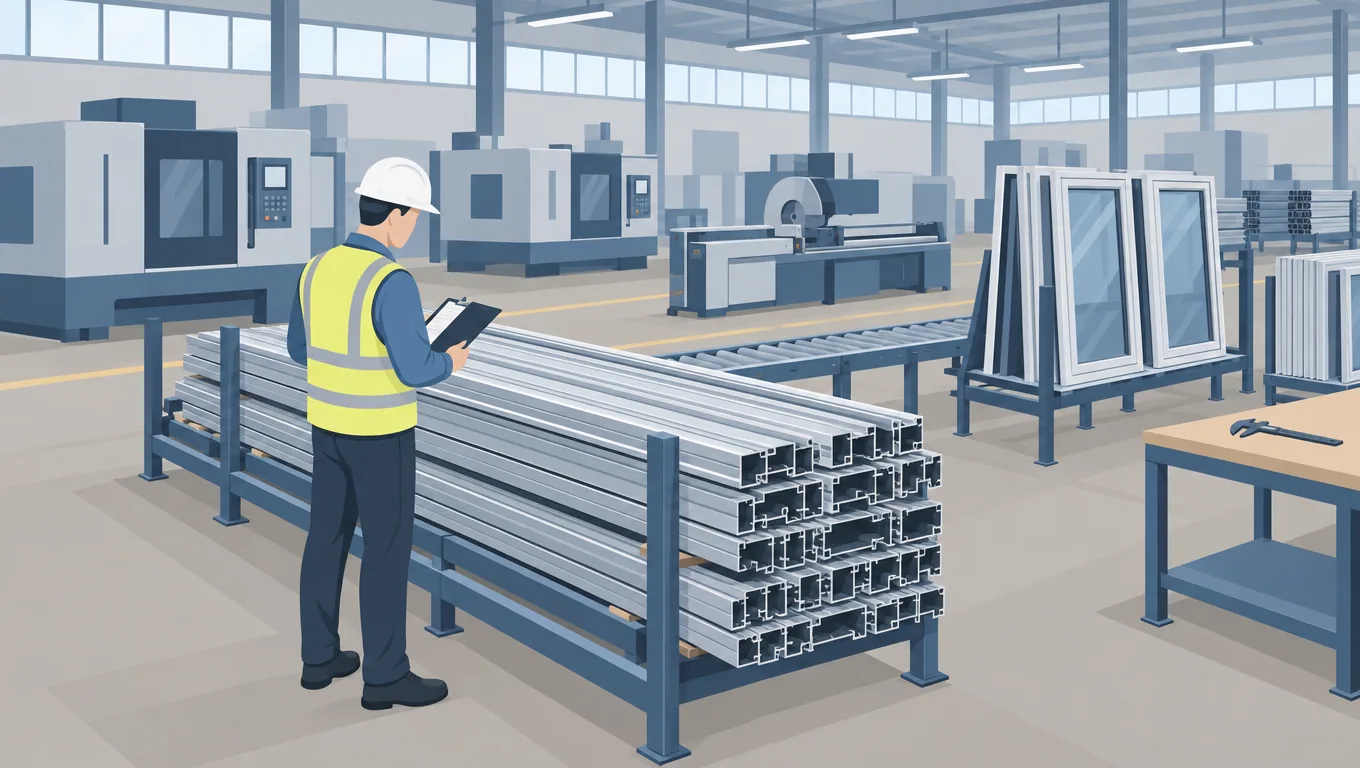
You do not need to fly in for a first pass. A structured 20–30 minute live video walkthrough, run as part of a written factory audit checklist, surfaces most of what an in-person visit would — provided you drive the camera instead of watching a prepared tour.
Check 5: Factory or Trading Company — the Walkthrough Test
Trading companies are not automatically bad; the problem is a trading company misrepresenting itself as the maker, because you lose direct control over spec changes and tolerance decisions. Three actions separate them. First, request an unscripted live video call in which a staff member walks the workshop continuously from cutting to packing without cutting the feed — prepared promotional edits do not count. Second, cross-check the company address from the business license on a map service: a production plant sits in an industrial zone, while a "factory" registered to a downtown office tower is a signal. Third, read the catalogue width — one company offering windows alongside tiles, furniture and lighting is usually a trading house with a price list, not a line. Red flag: the walkthrough is declined, forever "in maintenance", or replaced by edited footage.
Check 6: Machines That Match the Claims — the CNC Reality Check
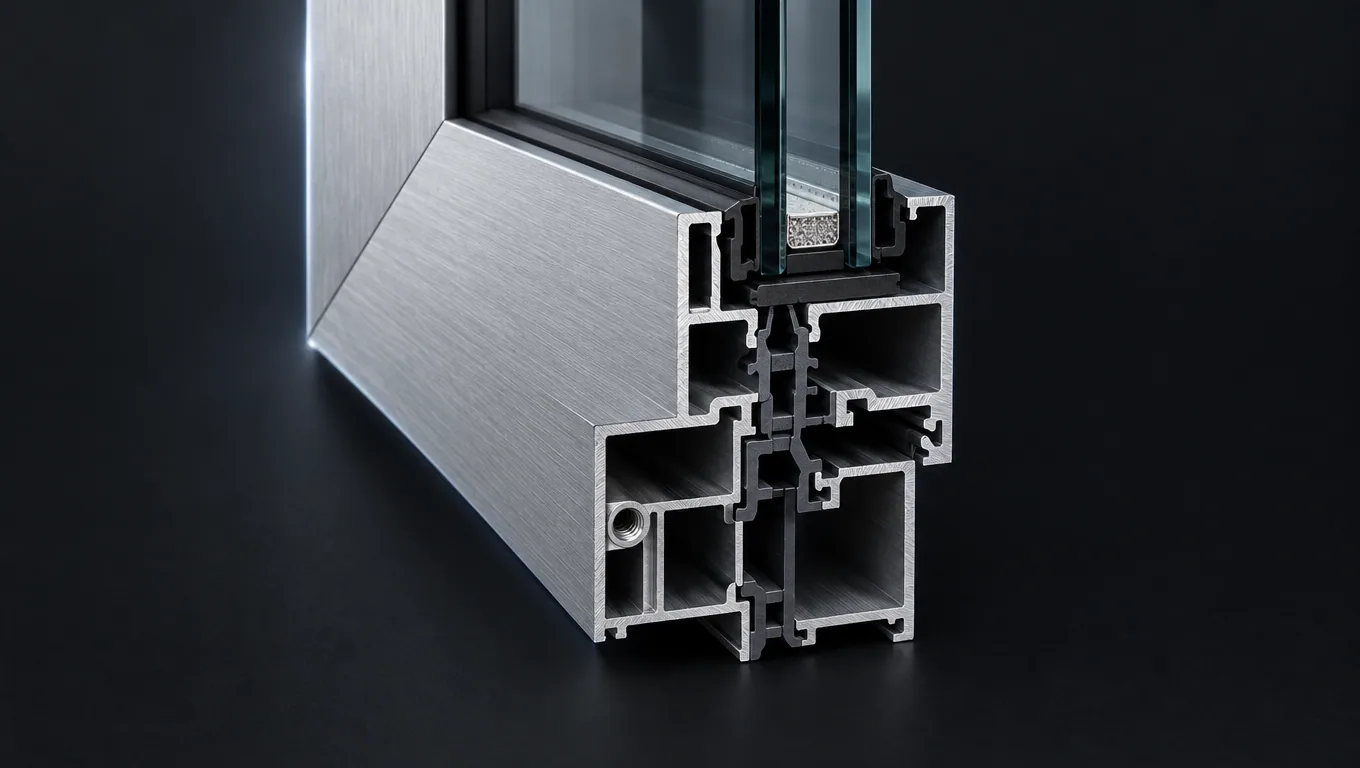
Aluminum window quality lives or dies on machining accuracy — mitre cuts, hardware routings, drainage paths — so the equipment count is not decoration. Ask how many CNC machining centres, double-head mitre saws and glazing tables the shop runs, then ask the video host to film machine nameplates up close, showing brand and serial, and to pan the floor so you can count machines live. Nameplates with consistent branding across a working floor match a genuinely equipped plant. Red flag: a polished showroom with one heroic machine while the workshop behind it is manual bench work, or machine counts that change between the first email and the video call.
Check 7: Work in Progress — What Is Actually Being Made Today
A floor with orders in production is a floor that knows its own process. On the video, ask the host to approach real work in progress: half-glazed frames moving down the line, cut profile bundles with paper labels bearing genuine series codes, packing stations with project-labelled cartons. Then ask the direct question: is the series you are buying in current production, and do the extrusion dies for it exist — on site or with the profile supplier? A series that must be re-tooled adds weeks and tolerance risk that no quotation mentions. Red flag: immaculate, empty lines; or every piece of WIP belongs to one unrelated product while yours is "no problem, we make it every day".
Check 8: The QC Station and Where Inspection Actually Happens
Quality is a sequence, not a final glance. Ask which checkpoints exist between cutting, CNC machining, assembly, glazing and packing, and who signs each one. Ask to see the QC station with instruments in use: calipers for profile wall thickness, glass and sealed-unit checks at the glazing line, and ideally an on-site water-tightness or air-tightness rig for sampled finished windows. Then ask to be shown one completed internal inspection record with a date from the current month — other buyers' names can be masked. Red flag: "QC" described as a single final random check before packing, a station with no instruments on it, or records that are never shown.
Transaction Checks (9–12): Protecting the Money and the Leverage
The last group decides what happens when something goes wrong — which is the only time terms matter.
Check 9: Payment Terms That Match Industry Norms
For full-container export orders, a common structure is a deposit with the balance paid against the copy of the bill of lading; a letter of credit is a rational instrument for a first order with a new supplier. What matters more than the split is where the money lands. The beneficiary name must match the contract entity and the business license, so request bank details on company letterhead with the company chop, then confirm the beneficiary against the license yourself. And treat any late-stage "our account has changed" email as fraud until proven otherwise: business email compromise targets exactly this moment in an order, and the only safe confirmation is a live video call with a person you have already seen on camera. Red flag: 100% payment before production starts on a first order, a deposit far above the norm for the order size, or any payment routed to a personal account.
Check 10: Sample Policy — What the Sample Proves and What It Does Not
A sample proves workmanship and finish; it does not prove what a production run of four hundred frames will look like, which is why the policy around it matters. Order a physical sample of the actual quoted series, and ask for a corner-cut section sample as well — a short profile cut lets you measure wall thickness with your own calipers. Thermal-break residential profile wall thickness is commonly quoted in the 1.4–1.8 mm range, with heavier specifications above 2.0 mm for tall or hurricane-exposed openings; treat any quoted number as a claim until you have measured the cut. Paid samples with the fee credited against the first order are a healthier signal than lavish free samples, because both sides have something at stake. Then seal a reference sample: sign or stamp across the packaging of one unit you keep, and name it as the quality reference in the contract. Red flag: refusal to provide a cut section, or a sample that quietly differs from the quoted series code.
Check 11: Contract Entity Consistency — One Name Everywhere
Before signing, lay five items side by side: the business license, the proforma invoice, the sales contract, the bank account beneficiary and every certificate you were sent. The legal entity name should match across all five. Where a factory sells under an export brand, the contract should state plainly that the brand is the export mark of the named manufacturing entity — certificates, as covered in Check 3, are issued to the manufacturing entity, not to the brand. The signature should be the legal representative or an agent carrying a written authorization letter, and the contract chop should match the license name. Red flag: the contract is signed by an offshore shell that is neither the factory nor the account holder, leaving you with a counterparty that owns no machines and no inventory.
Check 12: Production Milestones, Loading Evidence and the Right to Inspect
Write the visibility schedule into the contract, not into a chat thread: profile arrival, machining complete, glazing complete, packing complete, container loading — with agreed photo or video evidence at each step, including loading footage that shows the container number and the seal being applied. Reserve a pre-shipment inspection right: a third-party inspector checking goods against your approved sample a few working days before loading, at your cost, with the right to hold shipment on failure. Keep one named contact and agree on expected response times in working hours. Red flag: no loading video offered, pre-shipment inspection dismissed as "not necessary for our quality", or milestone photos that only appear when a payment reminder does.
Turning the 12 Checks Into a Working Routine
Sequence the work so the cheap checks kill bad candidates early. Days one and two: document checks one through four, all from your desk. Day three: the video audit for checks five through eight, driven from a written script so you compare suppliers on the same questions. Only then negotiate the terms for checks nine through twelve, because your leverage is highest before the contract is signed. Keep one folder per supplier — license screenshot, registry result, certificate PDFs, video notes, sample sign-off — so that a dispute six months later starts from evidence instead of memory.
Weight the results honestly. A supplier that passes the documents but stalls on the floor checks is telling you where the gap is; so is one with a great video and no scope-accurate paperwork. When you benchmark candidates, compare how each presents verifiable scope rather than how polished the brochure is — the Aoslon company profile shows the production line, showroom and QC photos we publish for exactly this kind of cross-checking, and the aluminum window systems catalogue names the series so any certificate or report can be matched to a real product code.
None of this is adversarial. Serious manufacturers welcome structured buyers, because the same checks that protect your deposit also screen out the competitors who undercut them with thin paper and borrowed workshops.
Frequently Asked Questions
How can I tell if an aluminum windows supplier is a factory or a trading company?
Ask for an unscripted live video walkthrough of the workshop, check the license address against a map, and look at catalogue breadth — windows plus unrelated categories usually means a trading house. On the call, verify machines by nameplate, look at work in progress, and ask whether the extrusion dies for your series exist. A real factory answers all of it in one call; a misrepresenting seller starts rescheduling.
What deposit percentage is typical when ordering aluminum windows from China?
For full-container export orders, a common structure is a deposit with the balance paid against the copy of the bill of lading; a letter of credit is reasonable for a first order with an unproven supplier. More important than the split is the beneficiary: the account name must match the contract entity and the business license, and any late "account changed" email should be treated as fraud until confirmed by live video call with a known person.
Which certificates should an aluminum window supplier provide for my market?
Whatever the destination requires, scoped to the exact series you are buying: EN 14351-1 documentation for the EU, NFRC rating documentation for North America, AS 2047 evidence for Australia, plus impact or water-penetration evidence where local codes apply. Read the entity name, the series scope and the validity dates on every document, and verify in the issuing scheme's public database where one exists. Our certifications page shows how scope-accurate credentials should be presented.
Can I verify a Chinese aluminum window supplier without visiting the factory?
Yes, for most of the risk. The official enterprise credit registry confirms the entity and its status; a customs-stamped export declaration confirms shipping history; a structured live video audit confirms machines, WIP and the QC station; and a third-party pre-shipment inspection catches quality issues before loading. A visit still adds value for large or repeated orders, but nothing here requires a plane ticket before the deposit decision.