OEM vs ODM Aluminum Windows: The Short Answer
OEM aluminum windows are manufactured to the buyer's drawings and sold under the buyer's brand; ODM aluminum windows are the factory's own developed system, selected from a range and rebranded for the buyer. In windows the distinction is narrower than in electronics or apparel, because every unit is made to an opening size either way. One layer decides it, and it is checkable in two places: who owns or controls the extrusion die, and who owns or controls the design of the window system behind it. If the die predates your order and the drawing is the factory's, you are buying ODM, whatever the nameplate says. Branding and certificates are not the test: a nameplate can be added to an ODM series, and the certificate stays with the manufacturing entity in both models. This guide compares the six customization layers, tooling ownership, certificate identity, MOQ drivers and the RFQ lines that separate the two.
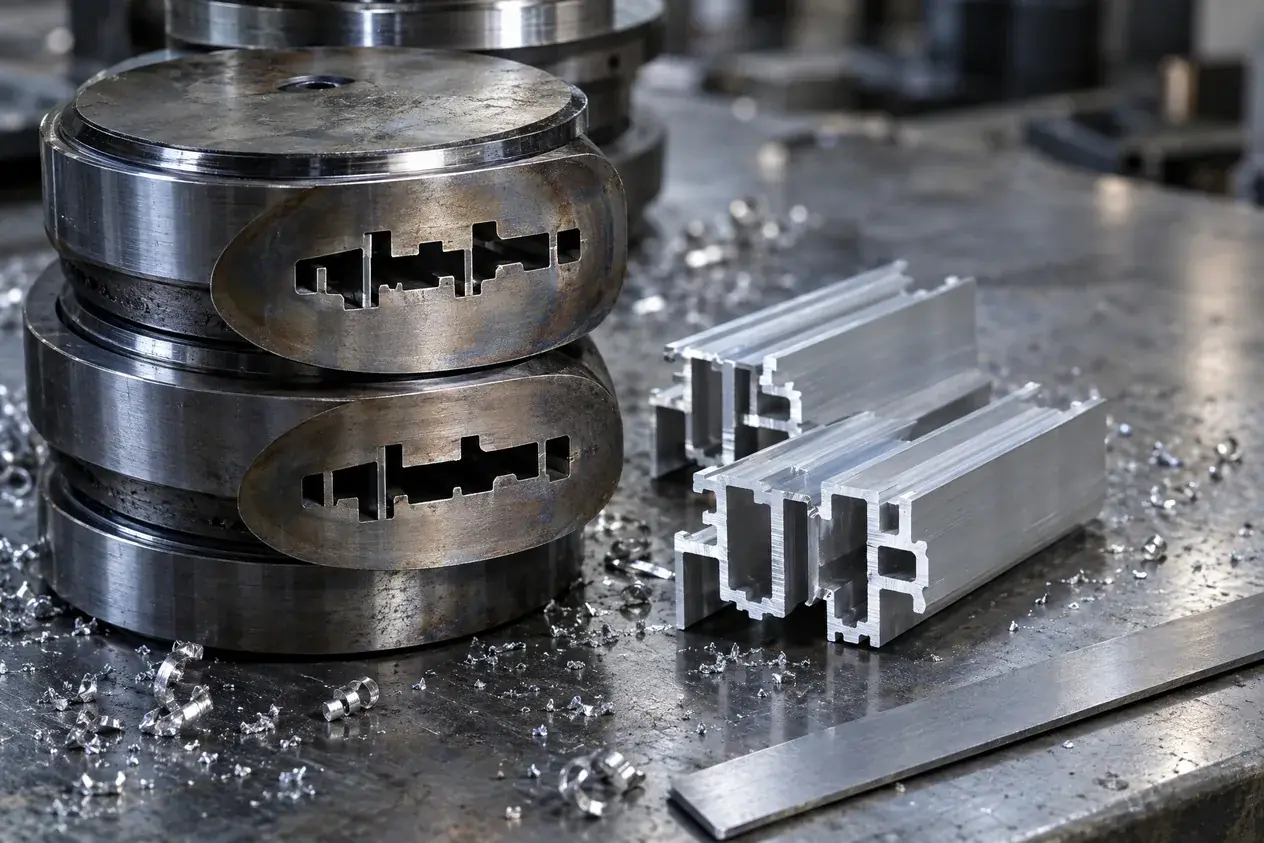
One sentence stays ahead of the detail: size is not the difference; ownership of the profile system — the die and the profile design behind it — is. Cutting a catalog series to your schedule is not OEM work, and building your drawing on the factory's die does not make the system yours.
What OEM Means for Aluminum Windows
In aluminum windows, OEM means the buyer controls the specification and the factory builds to it. You supply the opening schedule and elevations; the factory turns them into shop drawings, cuts profiles, assembles, glazes and ships under your brand. You own the market and the specification; the factory is the production entity and usually the legal manufacturer.
That definition gets stretched constantly. Suppliers call "we build our standard series to your sizes and put your label on it" OEM, and it sounds right. It is not: sizes are an input every window factory takes anyway. The test is one question — do I own or control the die and the window-system design? If the answer is dimensions plus a label, you are buying ODM with branding.
Real OEM shows up in what you must supply and approve: a profile specification, a shop-drawing cycle, first-article approval, brand artwork. Without those steps the word is a label. To check a claim, compare how aluminum window manufacturers and suppliers in China compare.
What ODM Means for Aluminum Windows
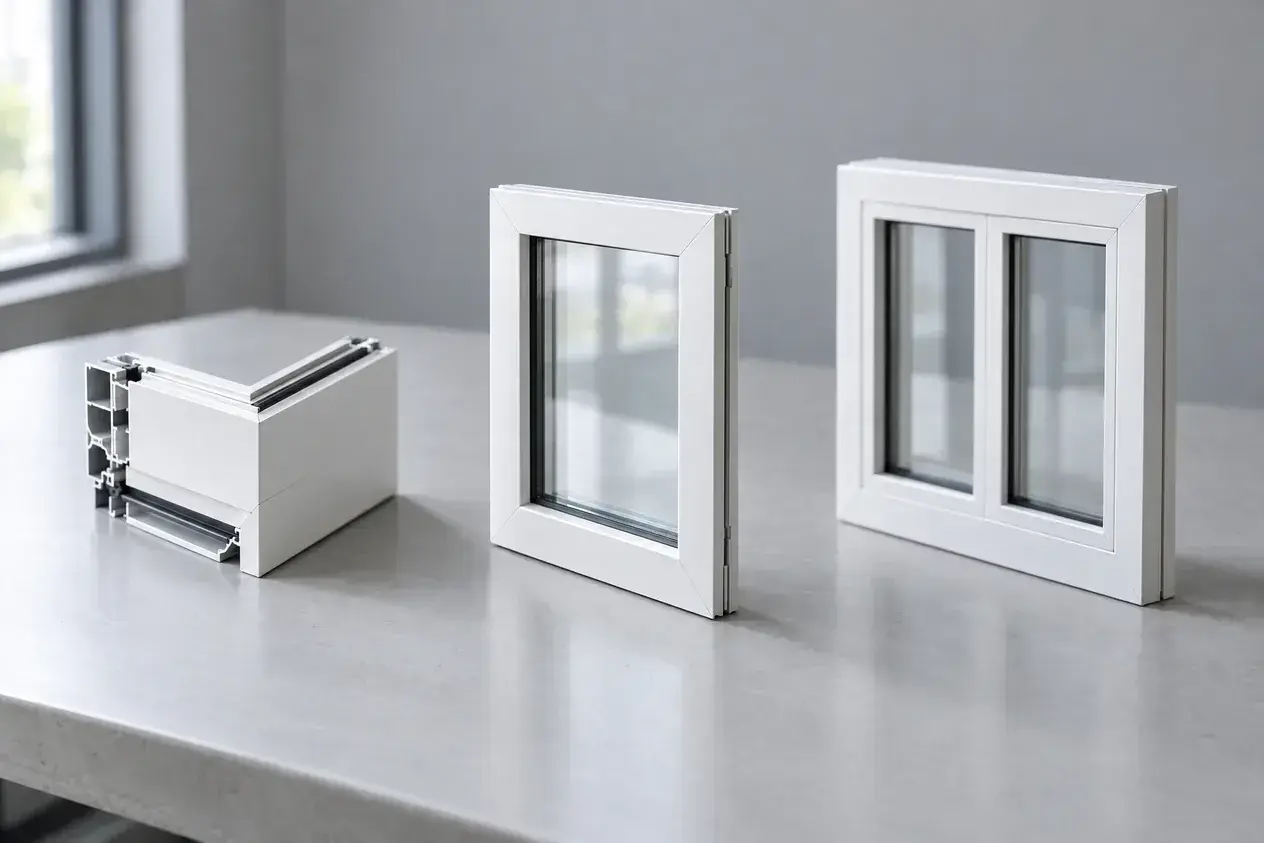
ODM means the factory has already developed, tooled and tested a system, and you select from it. The product is still made to measure — the profile is cut to your opening schedule — and you can usually change finish, glass and hardware brand within the series. What you do not get is a profile that exists because of you. The die predates your order and will outlive it.
The trade is real: no new tooling, no profile development, a shorter engineering path, and a series with test evidence behind it. For a dealer entering a market, that is often the better buy.
The cost is equally real: differentiation stops at the finish and the brand layer, the same series is sold to other buyers in your market, and the geometry is not yours. Most private-label programs are exactly this — an ODM series plus a brand layer. That is a specification, not a criticism.
The Real Difference: Six Layers of Customization
Customization is not one switch. It is six layers, and only one decides who the product belongs to. The columns describe what each model typically allows, not what every factory agrees to.
| Layer | ODM (typical) | OEM (typical) | What it decides |
|---|---|---|---|
| 1. Dimensions | Cut to your schedule | Cut to your schedule | Not the dividing line — every unit is made to measure |
| 2. Configuration | Series options | Buyer-specified within limits | Vent style, sash count, layout |
| 3. Profile and thermal system | Existing dies | Buyer-specified or modified die | Whether the system is yours — the true dividing line |
| 4. Finish and hardware | Standard range, buyer picks | Buyer specifies both | Appearance, feel, warranty exposure |
| 5. Branding and packaging | Factory brand or your label | Your brand throughout | Who the product appears to belong to |
| 6. Documentation | Factory-held, series-scoped | Same, unless re-issued | Who can legally cite the test evidence |
Layers one, two, four and five are configuration and brand: they change how the window looks, works and is labelled, and both models allow them. Layer three is identity: it decides whether you own a system. Layer six is the paper trail — it stays with the manufacturing entity in both models, so it tells you what you may cite, not what you own. The check is two clauses: who owns or controls the die, and who owns or controls the profile drawing and CAD. If neither asset is yours and neither was created for you, the order is ODM, however the quotation is labelled. A supplier offering layers one, two, four and five while calling it OEM sells configuration and a label — legitimate, if you know it. What a factory already runs is visible in its custom aluminum window systems pages, and that list is where an OEM conversation starts.
What a Private-Label Buyer Can Customize
Private label means the brand layer, plus the configuration the chosen series supports. Buyers ask for these most often:
- Finish and color — RAL powder coating, anodizing, wood-grain, PVDF.
- Glass — thickness, Low-E, tempered or laminated, argon, spacer.
- Hardware — brand, handle style and finish, lock, hinges.
- Screens — fixed, sliding, retractable, security mesh.
- Operation — handing, inswing or outswing, casement, tilt.
- Layout — sash count, mullions, transom heights.
- Sill and trim — sill profile, extension jambs, reveals.
- Brand layer — nameplate, label, carton, manual, series name.
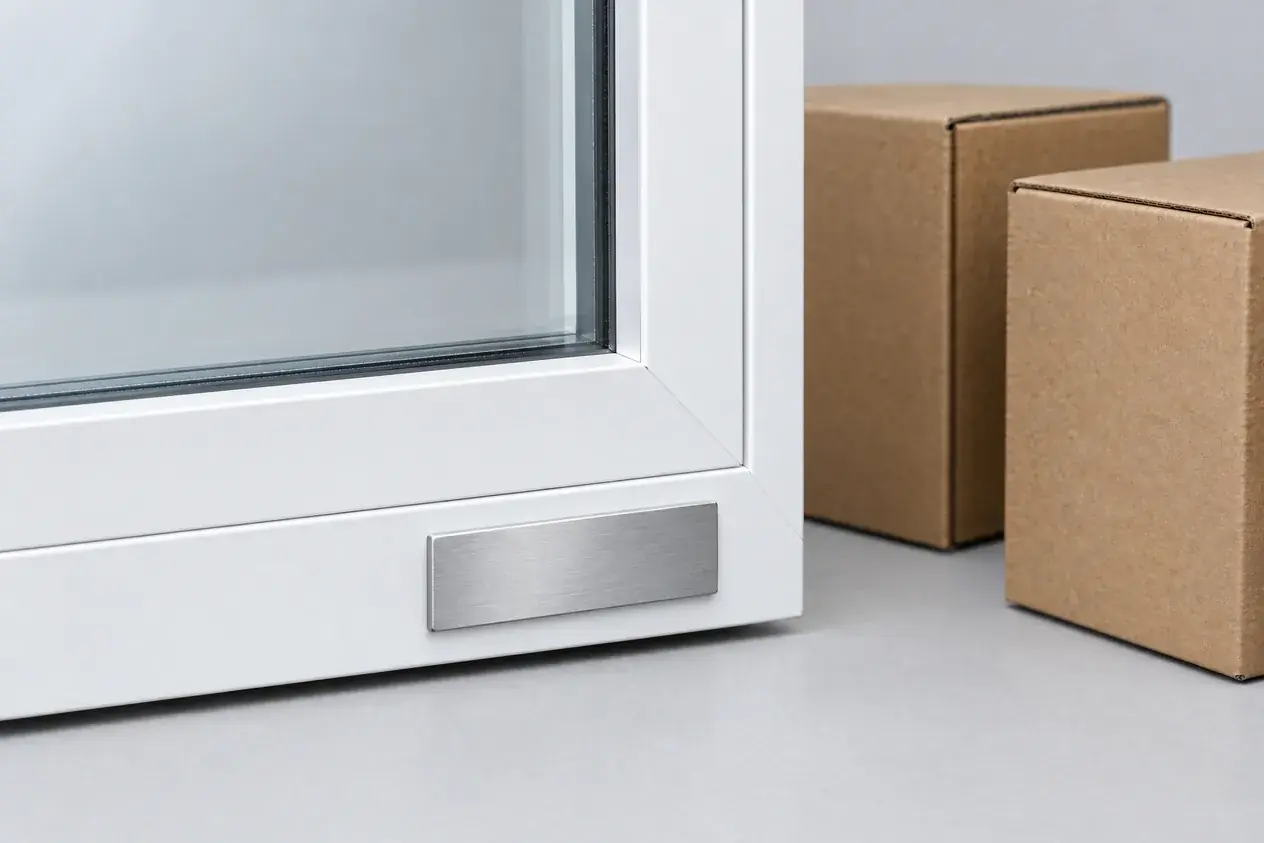
What you cannot change matters more. Certification marks may not be altered. The extrusion identification may remain on a branded order, because it identifies the die, not your company. Some markets require the importer's name and address on the label — confirm that with your market authority. Marking on glass or handles is sometimes possible: ask which components can carry it before you order.
So instead of asking "can you put my logo on it", request a branding matrix: one row per item — nameplate, label, carton, manual, catalog page, series name, glass and handle marking — with a column for can, cannot, or requires tooling. Aoslon's dealer and OEM program is built around that split.
Tooling, Dies and Who Owns the Drawing
Tooling has three situations. Using an existing die: it belongs to the factory, you buy capacity, and there is nothing to own. Modifying one: a one-off fee, the die may be shared, and exclusivity is separate from payment. Opening a new extrusion die: a long-lived asset your drawings define, and the case where ownership must be written down.
Six things belong in the contract before money moves: who owns the drawings and CAD files; who owns the die and where it is stored; exclusivity and territory; confidentiality on the geometry; how tooling cost is recovered; and what happens to the die on termination. Before you pay for tooling, get the ownership sentence in writing — the sentence, not the intention.
Whether a factory will open a new die is a question to ask early. Many will modify an existing die or steer you into the current range; some will tool a new profile for a committed program. Settle it before you draw around a profile that does not exist.
Whose Name Is on the Certificate? CE, NFRC and Your Brand
Start with the structural fact: certificates are issued to the manufacturing entity, not the brand, and each covers a specific series rather than a catalog. This is visible in the certificate scope published for each series. The manufacturer behind this site holds CE certification to EN 14351-1 for one sliding door type, an NFRC rating under NFRC 102 for one casement series, a Passive House Institute component certificate for one frame series, and ISO 9001 for its quality system.
Three conclusions follow. You may reference the factory's certificate for the series it names. You may not present it as covering your whole range. And it is not your certificate: your brand is a trademark layer, not the legal holder of the evidence. That is true in OEM and ODM alike — the model does not move the certificate.
Ask for the document by market, not a general claim. The EU route is CE marking to EN 14351-1 with a Declaration of Performance; the US route is the NFRC rating for that series, plus AAMA/WDMA/CSA 101/I.S.2/A440 where specified; Australia requires AS 2047, which the certificates published here do not cover. If the factory does not hold what your project needs, resolve that before bid.
When the PDF arrives, check the holder's name, the series scope and the validity date. An expired certificate is not evidence.
MOQ, Samples and the Approval Path
OEM and ODM share a production path; OEM adds approval steps. The shared path runs in this order:
- RFQ with opening schedule and destination.
- Quotation with Incoterm and validity.
- Factory issues shop drawings for review.
- You approve the drawings — the freeze point.
- Deposit received.
- Production: typically 25–45 days after drawing approval and deposit, as confirmed in the quotation.
- In-process and pre-shipment QC.
- Export packing.
- Shipment against the agreed Incoterm.
OEM adds four steps ODM usually skips: drawing revisions before the freeze, a sample or first article, brand artwork approval, and a packaging proof before cartons print. Each is a point where a schedule slips if the buyer is slow.
MOQ is driven by batch economics: the profile batch, the surface-treatment batch, the glass batch and the hardware pack each have a minimum that makes the run worth setting up. The published position is that MOQ depends on the series, the finish and whether the lot is a dealer stock order or a project order, with the number confirmed on the quotation. The cost structure is set out in the guide to aluminum window price per square meter.
How to Write an OEM or ODM Window RFQ
Most RFQs fail by omission, and the missing item usually decides whether quotes are comparable. State these twelve lines and a supplier cannot quote a different product.
| # | Line item | What to state |
|---|---|---|
| 1 | Model | OEM or ODM, plus the layers you control |
| 2 | Opening schedule | Rough openings or shop drawings in PDF, DWG or DXF |
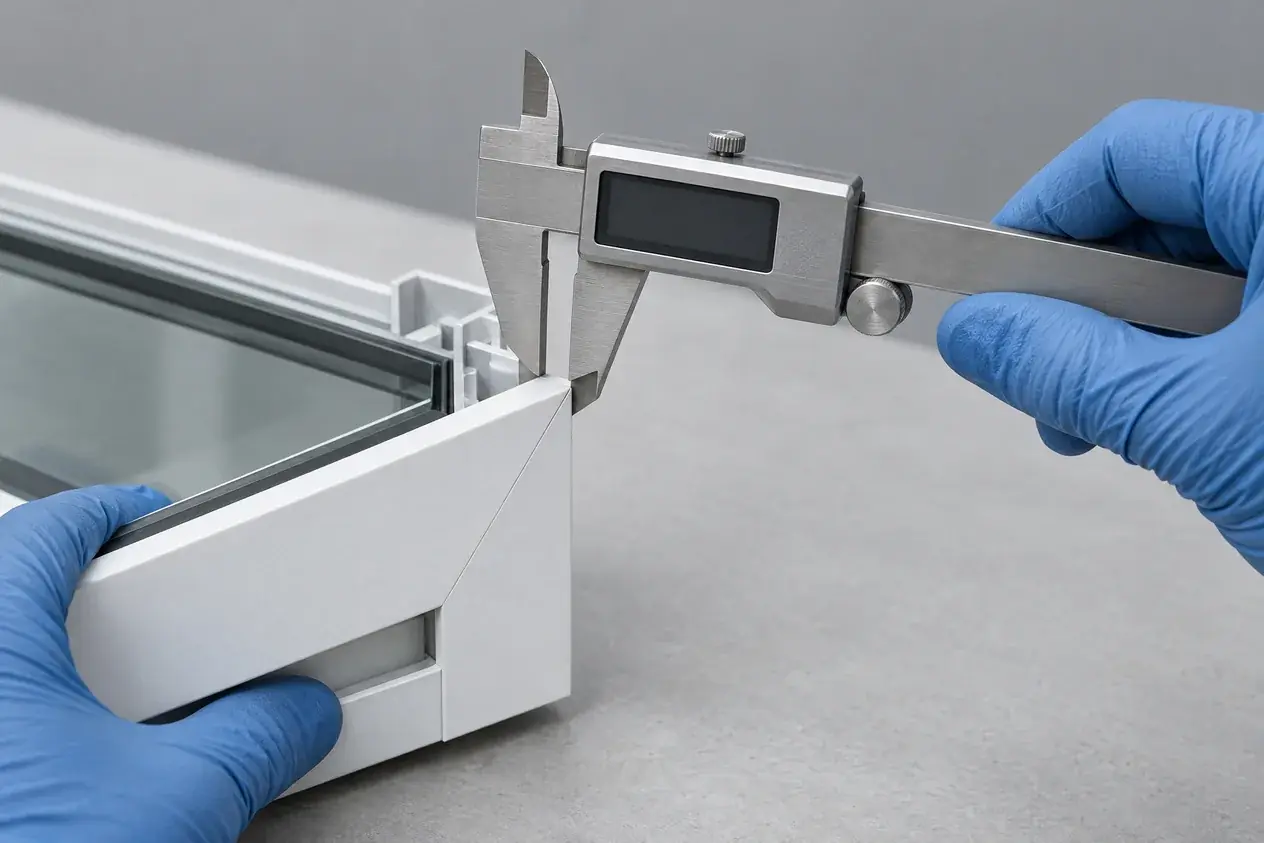
| 3 | Tolerances | Nominal sizes plus the tolerance accepted at inspection |
| 4 | Profile wall thickness | Required thickness; verified on samples? |
| 5 | Thermal break | Whether it is broken, and the target U-value |
| 6 | Glass | Build-up, coating, cavity, gas fill, tempering or lamination |
| 7 | Finish | Finish type, RAL or anodizing reference, exposure class |
| 8 | Hardware | Brand, function, handle finish, equivalents allowed |
| 9 | Screens | Type, mesh, fitted or loose |
| 10 | Brand layer | Logo, nameplate, label, carton print, manual, series name |
| 11 | Market and documents | Destination country, certificates or test reports required |
| 12 | Commercial frame | Destination port, Incoterm, quantity split, delivery window |
Items two, six, seven, twelve and the quantity split match the price guide's fields, and keeping them identical across suppliers makes quotes comparable. Line eleven tells you, before award, which certificates the factory can produce.
Frequently Asked Questions
Is OEM more expensive than ODM?
Usually, where a new profile is required. OEM adds engineering work, a one-off die or die modification, sample approval and packaging proofs. ODM avoids those because the system already exists. The gap varies with profile and finish, so it belongs in a project quotation, not a published figure.
Can I put my logo on the windows and packaging?
Yes, on the brand layer: nameplate, label, carton, manual, catalog pages and series name. Marking on glass or handles is separate — confirm per component first. Certification marking cannot change, and the extrusion identification may stay because it identifies the die.
What is the MOQ for a private-label order?
It depends on the series, the finish and whether the lot is dealer stock or a project order. MOQ is driven by profile, surface-treatment, glass and hardware batch sizes, and confirmed on the quotation rather than published as one number.
Who owns the drawings and the extrusion die?
Whichever the contract says. Ownership, storage, exclusivity, confidentiality, cost recovery and termination all need writing before tooling is paid for. An assurance that the die is yours means nothing unless the contract names you as owner.
Can my brand appear on the CE or NFRC certificate?
Not as the holder. Certificates are issued to the manufacturing entity and scoped to a specific series, so your brand is a trademark layer, not the certified party. You may reference the certificate for that series; you may not present it as your own. Confirm importer obligations locally.