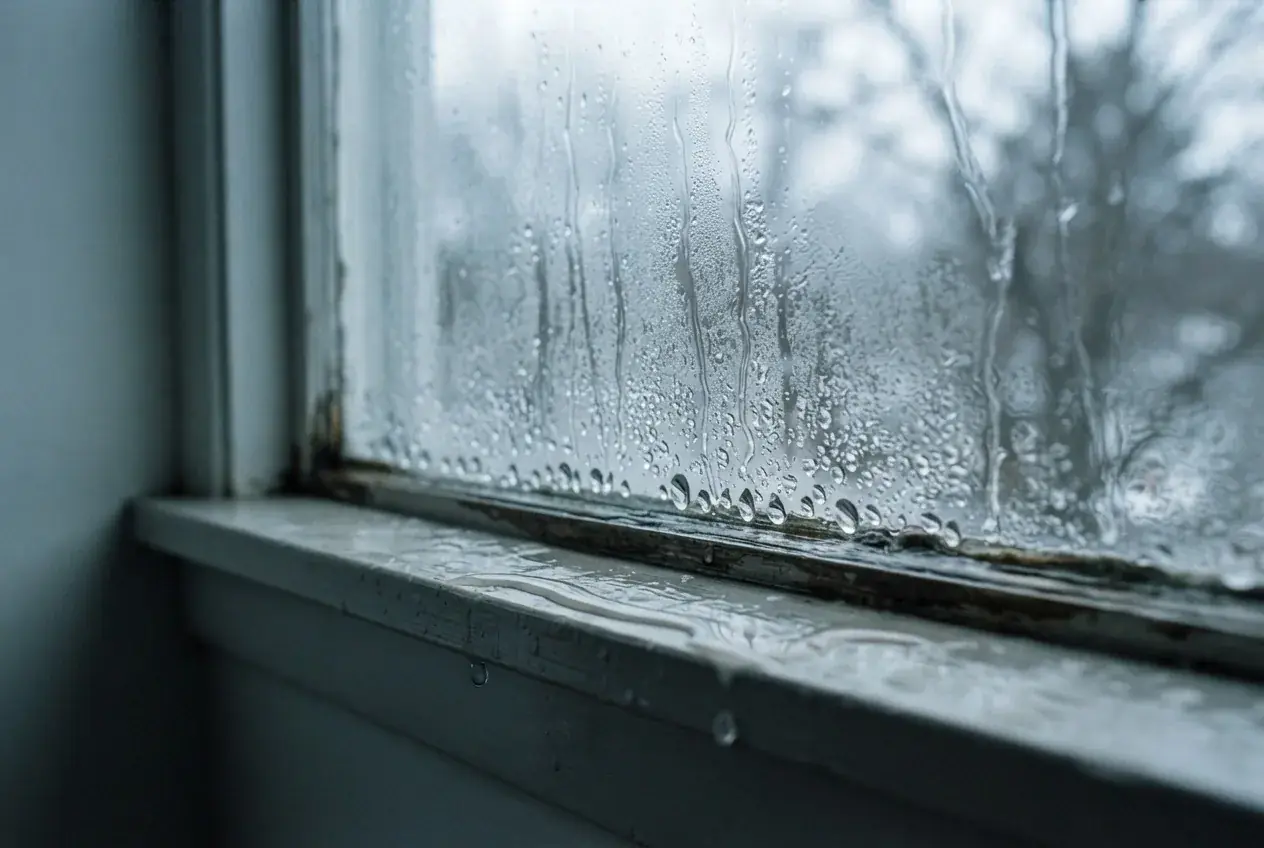
Condensation on the inside of windows is water vapor from indoor air condensing on a surface below the dew point. The location tells you which problem you have: room-side moisture points to indoor humidity or a cold surface, dew on the outdoor pane is normal physics, and fog between two panes means the sealed unit has failed. Three variables decide whether it happens — indoor relative humidity, outdoor temperature, and the surface temperature of glass and frame — and only the third is influenced by the window's construction, through its U-value; it still depends on the temperatures on both sides.
Why Is There Condensation on the Inside of My Windows?
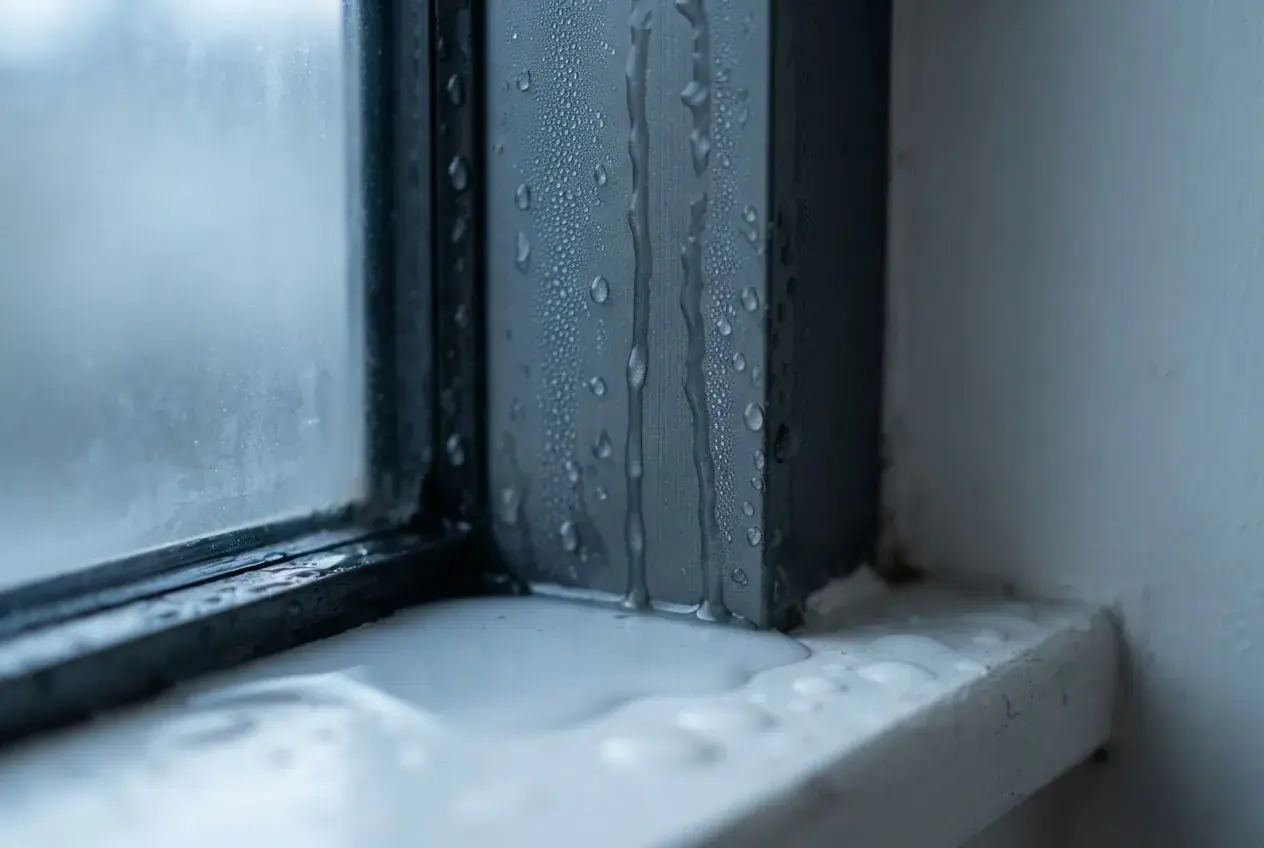
Interior condensation is a moisture signal before it is a window defect. "Inside the window" hides two failures — room-side water is inside the room and belongs here, while water between the panes is inside the sealed unit and belongs below. Room-side condensation is usually a humidity and ventilation condition, but a cold frame or cold glass edge can be the limiting surface, and then it is a window problem.
Two published ranges should not be merged: roughly 30–35% RH is the cold-climate winter target, 30–50% the comfort band, with 60% as an upper limit.
No single figure separates "your ventilation" from "your window": the threshold belongs to the window, and Table 2 puts it from about 14% RH for single glazing in severe cold to over 80% for triple. Measure with a hygrometer on a cold morning. Condensation only above roughly 40–50% RH is a humidity problem. At or below the 30–35% target the surface is too cold for air that is already dry, and what you replace depends on which surface is cold: new glazing where the glass is cold, a whole-window or frame upgrade where the frame or glass edge is.
| Location | What you see | Wipe test | Root cause | First action | Urgency |
|---|---|---|---|---|---|
| Room-side glass or frame | Fog, water film, droplets | Wipes off, returns | Moisture below dew point, or a cold surface | Measure RH; find which surface wets first | Usually low — high if the frame is cold |
| Outdoor face | Dew or thin frost | Wipes off; clears in sun | Outer pane below outdoor dew point | None | None — normal |
| Between panes | Haze, streaks, water line | Cannot be reached | Seal failed, desiccant spent | Replace the unit | High — end of life |
What Causes Condensation on Windows? Dew Point and Indoor Humidity
Dew point is a property of the air: the temperature to which it must be cooled before it can hold no more vapor. A surface condenses when it sits at or below it. At 21°C indoors, 30% RH gives 2.7°C, 40% gives 6.9°C, 50% gives 10.2°C and 60% gives 12.9°C (Magnus formula).
Surface temperature is calculable: Tsi = Ti − U × (Ti − To) × Rsi, with Rsi = 0.13 m²K/W. Table 2 runs four builds at two winter conditions.
| Glazing (center) | Typical U (W/m²K) | Surface temp, 21°C / −5°C | Condensation starts at | Surface temp, 21°C / −18°C | Condensation starts at |
|---|---|---|---|---|---|
| Single, 5 mm | 5.7 | 1.7°C | 28% RH | −7.9°C | 14% RH |
| Double, clear | 2.8 | 11.5°C | 55% RH | 6.8°C | 40% RH |
| Double, low-E | 1.4 | 16.3°C | 74% RH | 13.9°C | 64% RH |
| Triple, low-E | 0.8 | 18.3°C | 85% RH | 16.9°C | 78% RH |
The worked case explains why one house mists up and the next does not. A clear double at 21°C inside and −5°C outside has its glass center at 11.5°C: at 40% RH the dew point is 6.9°C and the surface stays dry, at 60% it is 12.9°C and the glass wets. The lower U-values of double glazed aluminum windows compared with single glazing buy this margin.
ISO 13788:2012 is the reference method: a simplified calculation of the internal surface temperature below which mold growth is possible, and of interstitial condensation risk — a calculation standard, not a product certification.
Condensation on the Outside of Windows: Is It Normal?
Exterior condensation is dew, and it usually means the outer pane is cold — which is what better-insulating glazing produces. At 0°C and 80% RH the outdoor dew point is about −3°C, so the pane must sit a few degrees below air temperature before anything forms.
The mechanism is radiative: on a clear night a vertical pane radiates to the sky and can sit several degrees below the air temperature, which is why exterior dew appears at dawn after a still, clear night. The heated interior does not chill the outer pane — if anything it lifts it — so a winter explanation that blames the warm room has the physics backwards.
Better glazing makes exterior dew more likely, not less. A low-E double or a triple has a lower glass U-value, so in the same weather its outer pane runs colder than that of an older clear double and reaches the outdoor dew point sooner. It is a sign the unit is doing its job, not a seal failure.
Why the neighbor's window stays clear comes down to exposure. Sky view, shelter, orientation and local humidity shift the outer pane temperature by a few degrees: a pane under a deep overhang sees a warmer sky, and wind raises the exterior surface coefficient and warms the pane.
Hot humid climates show the same effect from the other side: an air-conditioned building can hold its outer pane below the outdoor dew point overnight. Exterior condensation never justifies new windows — and a face warm in winter usually indicates more heat flow, though solar gain and mild air warm it too.
Why Do Aluminum Window Frames Condense Before the Glass?
Aluminum is one of the best conductors in a building envelope: roughly 200–240 W/m·K depending on alloy, against 0.25–0.31 W/m·K for polyamide — two orders of magnitude. A one-piece profile from warm inner face to cold outer face has almost no resistance along its length, so its inner face settles near the film-weighted mean of the two air temperatures: at 21°C inside and −5°C outside, roughly 1–2°C.
That is the cold bridge, and it is why a frame without a thermal break condenses before the glass. Run the same frame through the formula: a frame at roughly 5–7 W/m²K condenses at about 20–30% RH at 21/−5°C — below the winter target, so it runs while the air is still dry — while a thermally broken frame at roughly 2–3.5 W/m²K holds its inner face near 9–14°C and stays clear until roughly 45–65% RH. The difference is a few W/m²K, not a few hundred — enough to cross the dew point.
A break cuts the path — a non-metal strip between inner and outer profiles so no continuous aluminum bridges them. Our thermal break sliding windows use PA66 GF25 polyamide strips. Strip grade and width set the frame U-value, so ask for the polymer grade, the width and a frame Uf figure in the RFQ.
A break does not warm the glass. It raises the frame's inner surface temperature and moves the first condensation to the glass edge; if the frame U-value is still higher than the glazing's, the frame still condenses first. The junction and spacer bar run colder than the center, so the edge is usually the first wet line.
What Causes Condensation Between Double-Pane Windows?
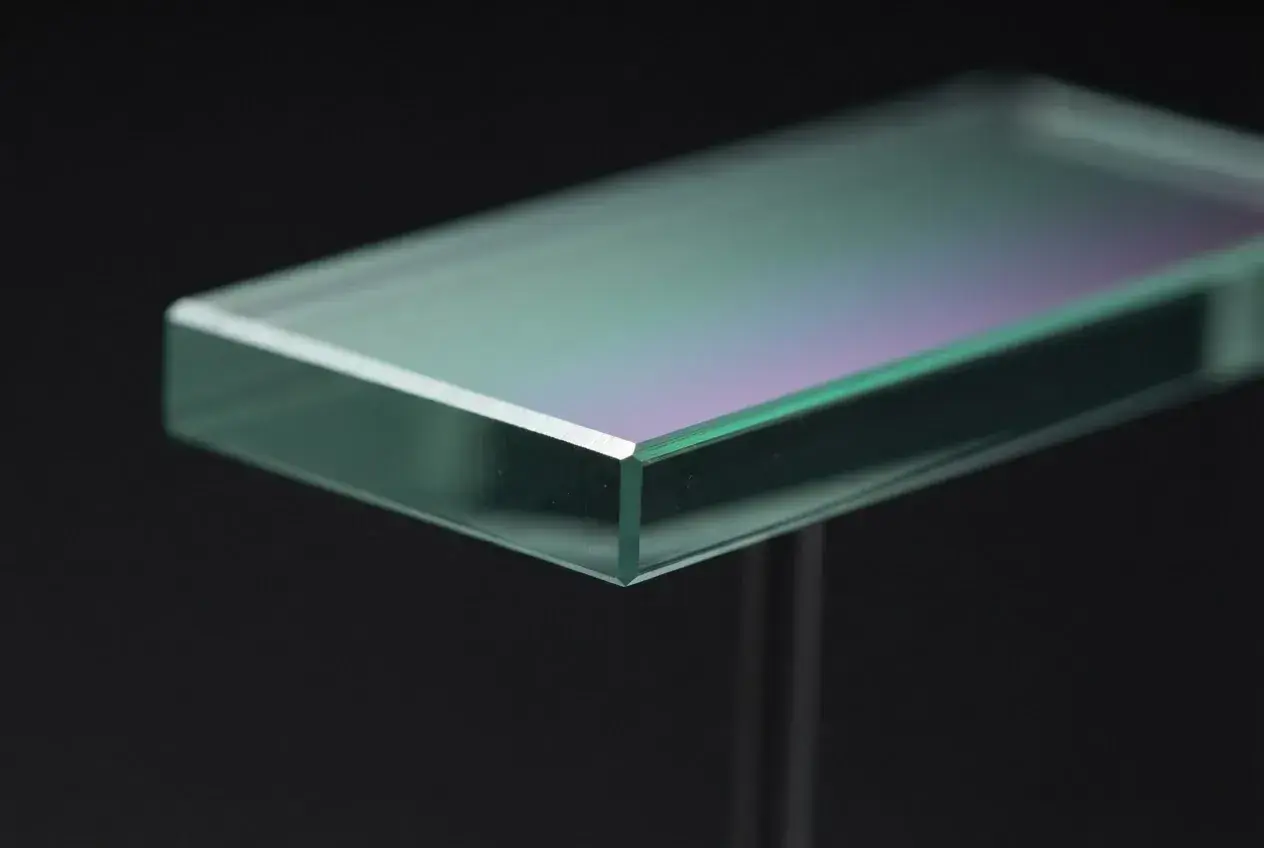
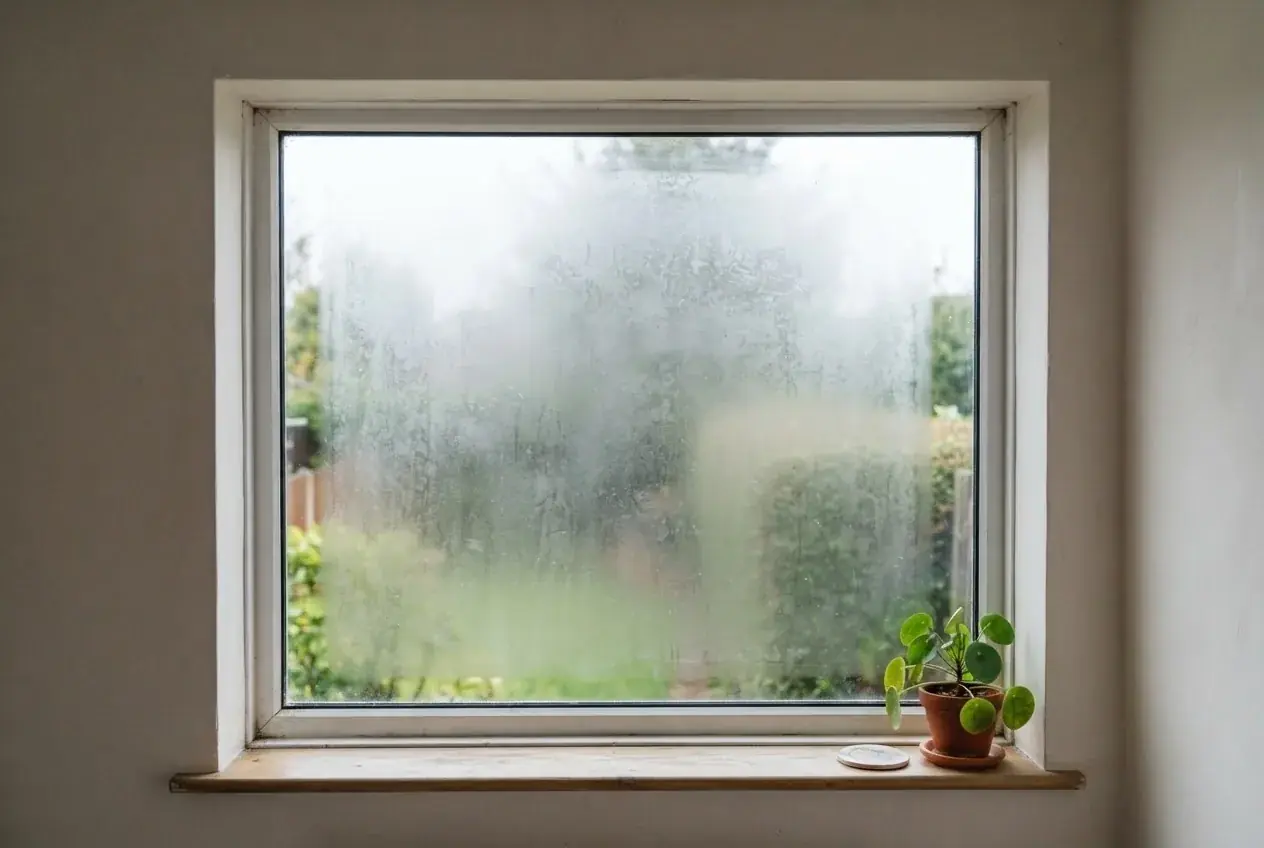
Fog, white streaks, droplets or a water line between the panes is a failed insulating glass unit. The cavity is sealed at the factory and filled with dry air or gas; desiccant in the spacer absorbs residual moisture. When the perimeter seal fails, vapor migrates in, the desiccant saturates and the cavity fogs.
The seal is two-stage: a primary polyisobutylene (PIB) seal that blocks vapor and retains the gas fill, and a secondary polysulfide or silicone seal as the structural bond. Drilling a vent hole may clear the fog temporarily, but it leaves the staining and admits moisture.
A triple unit has two cavities and either can fog; secondary glazing adds a sealed cavity whose condensation usually appears on the room-side face of the inner sheet.
Industry guidance quotes a decade or two of service life for the sealed unit; get the seal warranty and expected life in writing.
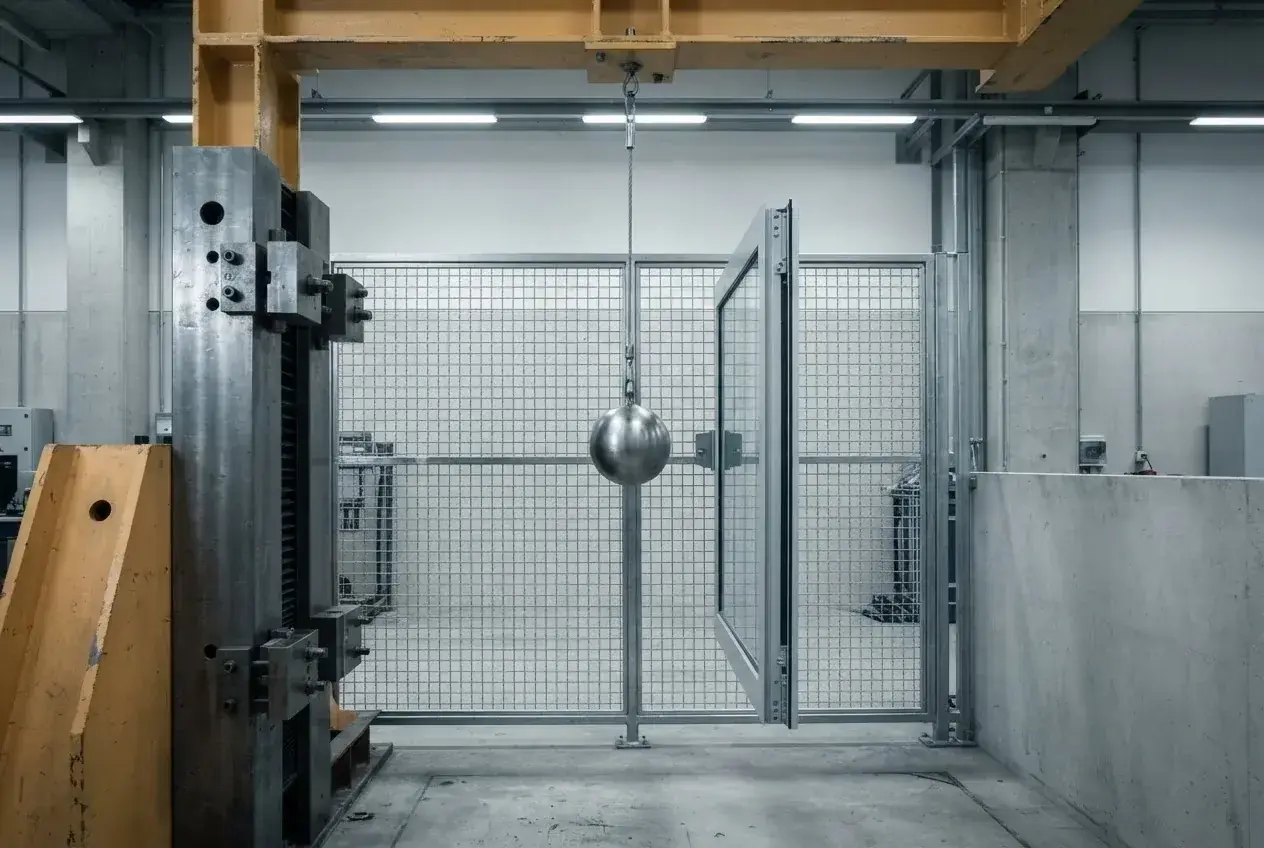
EN 1279-2 covers long-term moisture penetration, method and requirements; EN 1279-3 covers gas leakage rate and gas concentration tolerances. Both are insulating-glass-unit standards, not whole-window standards, and a report for one build does not automatically transfer to another size, spacer or gas fill — check the certificate's scope.
How Do You Stop Moisture Buildup on the Inside of Windows?
The fixes run from almost free to a full replacement, and the order matters because the cheap steps test whether the expensive ones are needed: ventilation, then measurement, then a dehumidifier, then perimeter repairs, then the glass unit, then the window.
Start with air: extract fans, curtains clear, no firewood or laundry indoors. Then measure — a hygrometer turns an argument into a number, and the winter target is 30–35% RH, read rather than felt. Before replacing glass, check the perimeter: air leaking through failed sealant or a flat gasket creates a local cold spot that wets first even when the unit is sound.
Fixed aluminum windows have no moving sash, so there is no compression seal to wear and no hardware to drift. That is not the same as maintenance-free: the perimeter sealant and glazing gasket still age, and a leaking perimeter makes the same cold spot on any window. A fixed unit also does nothing about indoor humidity — with the same glass it condenses at the same humidity. The expensive mistake is buying a better window while the room stays at 60% RH.
When Is Condensation Bad Enough to Need New Windows?
Table 3 sorts the four cases that reach a supplier; only two justify glass or window work.
| Symptom | What it means | Glass-only fix | Whole-window fix | Decision rule |
|---|---|---|---|---|
| Fog between panes, frame sound | Seal failed, desiccant saturated | Yes — new unit | Not required | Replace the unit; claim warranty |
| Droplets or pooling in the cavity | Advanced seal failure; check drainage | Yes, after drainage is corrected | Only if the frame traps water | Fix drainage first, or it fails again |
| Interior condensation at 30–35% RH on a frame without a thermal break | Frame surface temperature is the limit | No | Yes | Replace the window or frame; new glass alone does not warm the frame |
| Interior condensation only above 40–50% RH | Humidity above the winter target | No | No | Ventilate or dehumidify; the window is not the problem |
Replace the unit, not the window, when the fog is between panes and the frame is sound. A new sealed unit costs a fraction of a window and solves the symptom. If the cavity holds standing water or the frame does not drain, correct drainage first, or the new unit fails the same way.
Replace the whole window when a frame without a thermal break still condenses at 30–35% RH. The air is already at the cold-climate target, so surface temperature is the constraint and no glass upgrade warms the frame. Hard signals: standing water in the cavity, fog that does not clear as the day warms, and frame condensation at target humidity.
If the cold surface is the glass — single glazing, or a clear double whose center condenses at target humidity — a unit swap is the right purchase and a frame upgrade is not required.
Two ratings cover this. NFRC 500 rates Condensation Resistance on a roughly 0–100 scale, higher being more resistant, simulated at 21°C indoor and −18°C outdoor across 30%, 50% and 70% RH. FGIA/AAMA 1503 reports a Condensation Resistance Factor from a hot-box test at the same temperatures with a 15 mph air speed. Both are procedures rather than certifications, and CRF is comparative, not a pass line.
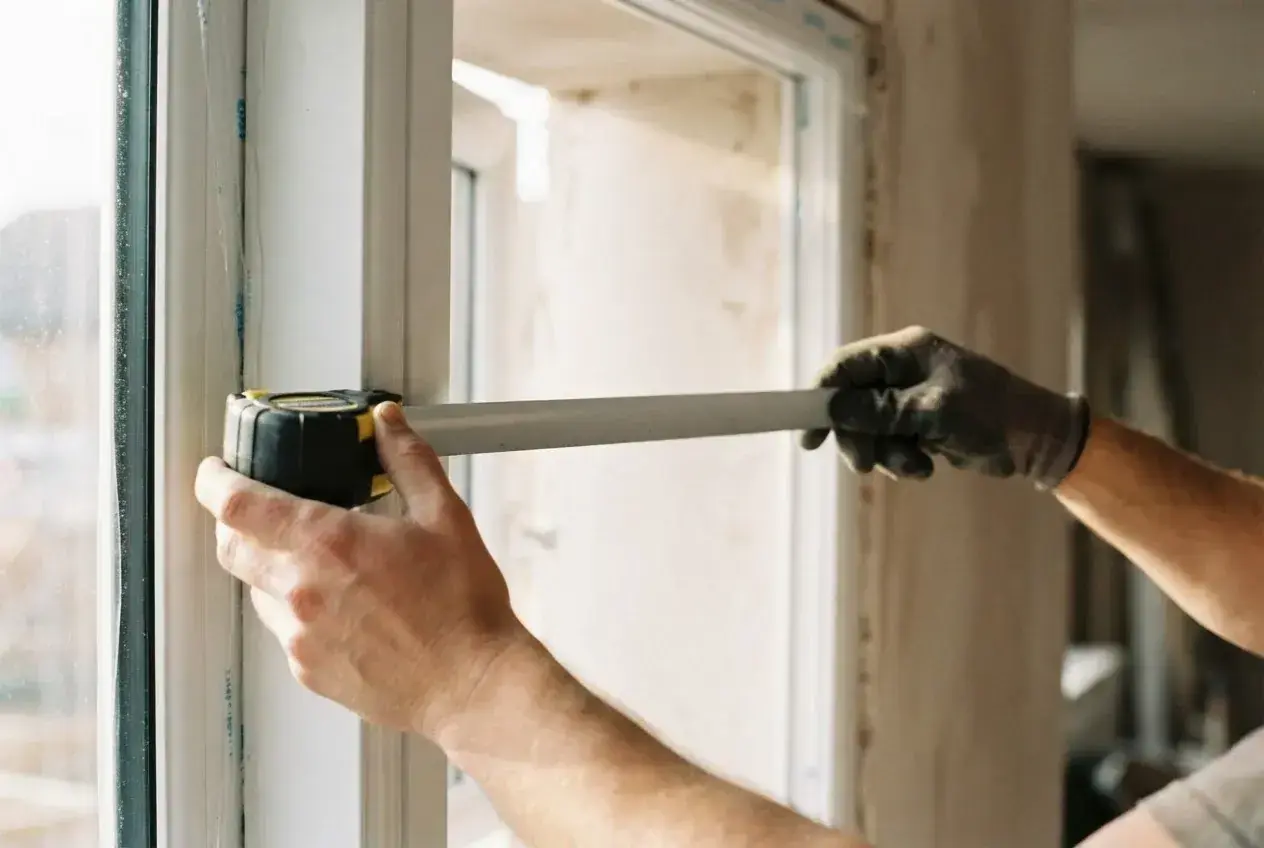
Specify so two quotes can be compared: whole-window Uw, frame Uf, glass Ug and build, thermal break material and width, insulating glass seal system, and the installation closure and drainage detail. "Double glazing" alone compares nothing.
Frequently Asked Questions
Why is there condensation on the inside of my windows only in winter?
Because the outdoor temperature sets the indoor surface temperature. In summer the glass stays above the dew point of room air; in winter it can fall 10°C or more below room temperature, and the dew point at 60% RH is 12.9°C.
Is condensation on the outside of windows normal?
Yes. It is dew from outdoor air on a pane cooled below the outdoor dew point, most often at dawn on clear, still nights. Better-insulating glazing makes it more likely, and it wipes off from outside.
How much indoor humidity is too much for windows?
It depends on the window. Keep winter RH at roughly 30–35% in a cold climate; a single-glazed or non-thermal-break window can condense well below 30% in severe cold, which is why Table 2 gives a threshold per build.
Why is there condensation between double-pane windows that won't wipe away?
Because it is inside the sealed cavity, not on a surface. The perimeter seal has failed, vapor has entered and the desiccant is saturated, so the fog will not clear. The unit has to be replaced, and a unit that fogs within warranty is normally a claim.
Do thermal-break aluminum windows stop condensation completely?
No. A thermal break raises the frame's inner surface temperature, so the frame stops condensing first and the water usually moves to the glass edge. It does not change the glass temperature, and at a high enough indoor humidity any window will condense.