A window U-factor is the rate at which heat crosses the whole assembly — frame, glass, spacer and edge — per square meter of opening per degree of temperature difference, in W/(m²·K) or BTU/(h·ft²·°F); lower is better. It is useful because it is determined for the assembly rather than for a glass sample, but it is narrow: a steady-state winter value, no solar gain, a sealed specimen and no infiltration pressure difference. It therefore hides air leakage, solar gain, installation bridges and the fact that the rating belongs to one size and configuration, which is why the same glass can carry several different ratings. Five variables decide the rated result: frame, glazing, spacer, size and window type. This article converts U-factor to R-value, reads an NFRC label and runs one 1.5 × 1.5 m opening through three configurations.
What Is U-Factor in Windows — and How Do You Convert It to R-Value?
In ISO and European practice the same quantity is the U-value, and Uw is the whole-window value; the SI unit is W/(m²·K), while North America uses BTU/(h·ft²·°F).
U and R are reciprocals only for the same construction and area. Imperial R is h·ft²·°F/BTU; metric R is m²·K/W. One W/(m²·K) equals 0.17611 BTU/(h·ft²·°F), and one BTU/(h·ft²·°F) equals 5.678263 W/(m²·K). R-3.5 becomes U 0.286, or 1.62 W/(m²·K); 1.4 W/(m²·K) becomes R 0.714 m²·K/W, or R-4.06.
| U-factor (W/m²K) | U-factor (BTU/h·ft²·°F) | R-value (m²·K/W) | R-value (h·ft²·°F/BTU) | Typical construction |
|---|---|---|---|---|
| 6.5 | 1.14 | 0.15 | 0.87 | Single glazing, standard aluminum |
| 3.5 | 0.62 | 0.29 | 1.62 | Double clear, standard aluminum |
| 2.7 | 0.48 | 0.37 | 2.10 | Double clear, thermally broken frame |
| 1.4 | 0.25 | 0.71 | 4.06 | Double Low-E, argon, thermally broken |
| 1.0 | 0.18 | 1.00 | 5.68 | Triple Low-E, argon or krypton |
| 0.8 | 0.14 | 1.25 | 7.10 | High-performance triple glazing |
The trap is mixing bases. A glass datasheet may quote R-3.5 at the center of a double Low-E unit; inverting it gives 0.286, not the 0.42 an NFRC label may show. The reciprocal of a center-of-glass R is a center-of-glass U. A whole-window value adds frame, spacer and edge, so it normally lands above the glass value — with ordinary aluminum frames, far above it. The exception runs the other way: a poor glass in a very well insulated frame can rate slightly below its own Ug.
How Do You Read an NFRC Label — and Which U-Factor Actually Counts?
| Label field | What it measures | Scale or unit | Check before comparing |
|---|---|---|---|
| U-factor | Whole-window heat transfer | BTU/(h·ft²·°F); 0.20–1.20 label scale | Same size, frame, glazing and spacer |
| SHGC | Solar heat admitted | 0–1 | Orientation, shading, climate |
| VT | Visible light transmittance | 0–1 | Daylight and privacy; read with SHGC |
| Air Leakage | Infiltration at rated pressure | cfm/ft²; label scale to 0.3 | Same test pressure |
| Condensation Resistance | Resistance to interior condensation | Index; higher is better | Cold-climate comfort |
The U-factor is rated at 0°F (−17.8°C) outside, 70°F (21.1°C) inside, a 15 mph (24 km/h) wind and no solar radiation, with the specimen sealed against infiltration. The wind sets the outdoor surface film; it is not a leakage pressure. Fixed conditions make products comparable, not annual bills.
The whole-window value counts, not the center-of-glass value. NFRC 100 defines how U-factor is determined — by test or by simulation — and NFRC 102 the laboratory measurement; NFRC 200 covers SHGC and visible transmittance. The label is an area-weighted average across frame, glass, spacer and edge. A double Low-E argon unit with Ug near 1.4 W/(m²·K) commonly reaches Uw 1.6–2.4 in a thermally broken frame; the gap above the glass value is the frame and edge a datasheet omits. Our aluminum double glazed window systems are specified on that basis.
Why Does an Aluminum Frame Push the Whole-Window U-Factor Up?
Aluminum conducts at roughly 160–200 W/(m·K); the polyamide in thermal breaks, typically PA66-GF25, at about 0.2–0.3 W/(m·K). A continuous aluminum frame acts as a fin; a thermal break inserts a low-conductivity bar.
Frame Uf is about 5.5–7.0 W/(m²·K) for ordinary aluminum, 2.0–3.5 for thermally broken aluminum, and about 1.3–1.8 for optimized profiles with a wide, multi-chamber break. These are frame values, not whole-window values.
The spacer is the second weak point. ψ is about 0.06–0.10 W/(m·K) for aluminum, 0.05–0.07 for stainless steel and 0.02–0.04 for warm edge. In a 1.5 × 1.5 m window it carries 5–6% of heat flow; in a small window about 9%, because the perimeter is long relative to the glass.
Frame area explains the rest. At 1.5 × 1.5 m with a 60 mm frame, the frame is 15.4% of the opening and 28.7% of heat flow with ordinary aluminum (Uf 6.5) and double clear glass (Ug 2.7, ψ 0.08). At 0.6 × 0.9 m it is 30.7% of area and 47.0% of heat flow.
| Metric | Ordinary aluminum build-up | Thermally broken build-up | Note |
|---|---|---|---|
| Frame Uf (W/m²K) | 5.5–7.0 | 2.0–3.5 | Optimized profiles approach 1.3 |
| Spacer ψ (W/m·K) | 0.06–0.10 | 0.02–0.04 | Aluminum vs warm edge |
| Frame heat share, double Low-E | 42.0% | 26.4% | Ug 1.4 W/m²K |
| Uw, same double Low-E glass | 2.38 W/m²K | 1.74 W/m²K | 27% lower; frame and spacer together |
Holding the glass constant isolates the frame effect. With double Low-E glazing, a thermally broken frame and warm-edge spacer take Uw from 2.38 to 1.74 W/(m²·K), 27% lower; with double clear glass, from 3.48 to 2.84, 18% lower.
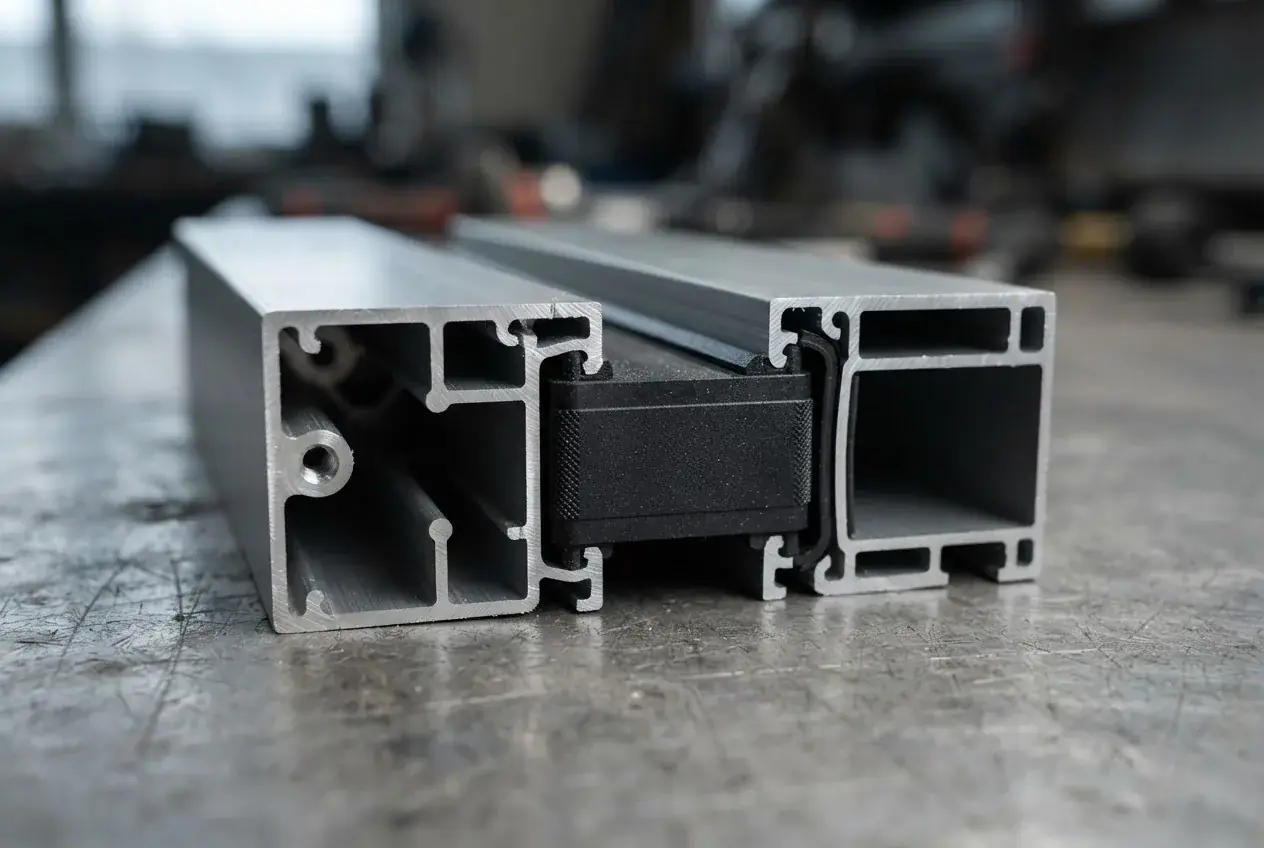
Aoslon's thermal break sliding windows are quoted with the profile series, break width, glazing build and spacer on the drawing — the inputs a Uw figure has to be tied to.
What U-Factor Do You Need for Cold, Mixed and Hot Climates?
There is no single target: ranges follow the dominant load and overlap because type, size and glazing change the result.
| Climate type | Dominant load | Target Uw (W/m²K) | Target Uw (BTU/h·ft²·°F) | Also specify |
|---|---|---|---|---|
| Cold, heating-dominated | Conduction and air leakage | 1.0–1.6 | 0.18–0.28 | CR, warm edge, airtightness, installation |
| Mixed | Heating and cooling | 1.4–2.0 | 0.25–0.35 | SHGC by orientation, shading |
| Hot, cooling-dominated | Solar gain | 1.8–2.6 | 0.32–0.46 | SHGC, overhangs, Low-E type |
These are selection targets, not legal minima. National building codes set any minimum Uw that applies; in the US, ENERGY STAR sets separate criteria. CE marking is not a threshold: under EN 14351-1 it declares the Uw a product achieves, and the declaration of performance records that figure without passing or failing it. A CE mark tells you what was declared, not that the window clears a minimum — read the declared number against the governing code. Cold projects also need a condensation resistance check: a low U-factor does not prove the frame stays above dew point.
What Does a U-Factor Difference Actually Save? One Opening, Three Configurations
The calculation follows EN ISO 10077-1: Uw = (Ag·Ug + Af·Uf + Lg·ψ) / A, where Ag and Af are glass and frame areas, Lg the glass perimeter and A the opening. Take one 1.5 × 1.5 m opening, 2.25 m², and three configurations.
| Configuration | Frame | Glazing | Ug (W/m²K) | Uf (W/m²K) | ψ (W/m·K) | Uw (W/m²K) | Uw (BTU/h·ft²·°F) | kWh/yr | vs A |
|---|---|---|---|---|---|---|---|---|---|
| A | Standard aluminum, 60 mm | Double clear, air | 2.7 | 6.5 | 0.08 | 3.48 | 0.61 | 752 | — |
| B | Thermally broken, 60 mm | Double Low-E, argon, warm edge | 1.4 | 3.0 | 0.04 | 1.74 | 0.31 | 376 | −50% |
| C | Thermally broken, 70 mm | Triple Low-E, krypton, warm edge | 0.8 | 2.4 | 0.035 | 1.17 | 0.21 | 253 | −66% |
A loses about 752 kWh/yr, B 376 and C 253, using 4,000 K·day (96,000 K·h) and Q = U·A·HDD. A to B saves 376 kWh, or 50%; B to C saves 123 kWh, or 33% of B. The second step costs more and saves less.
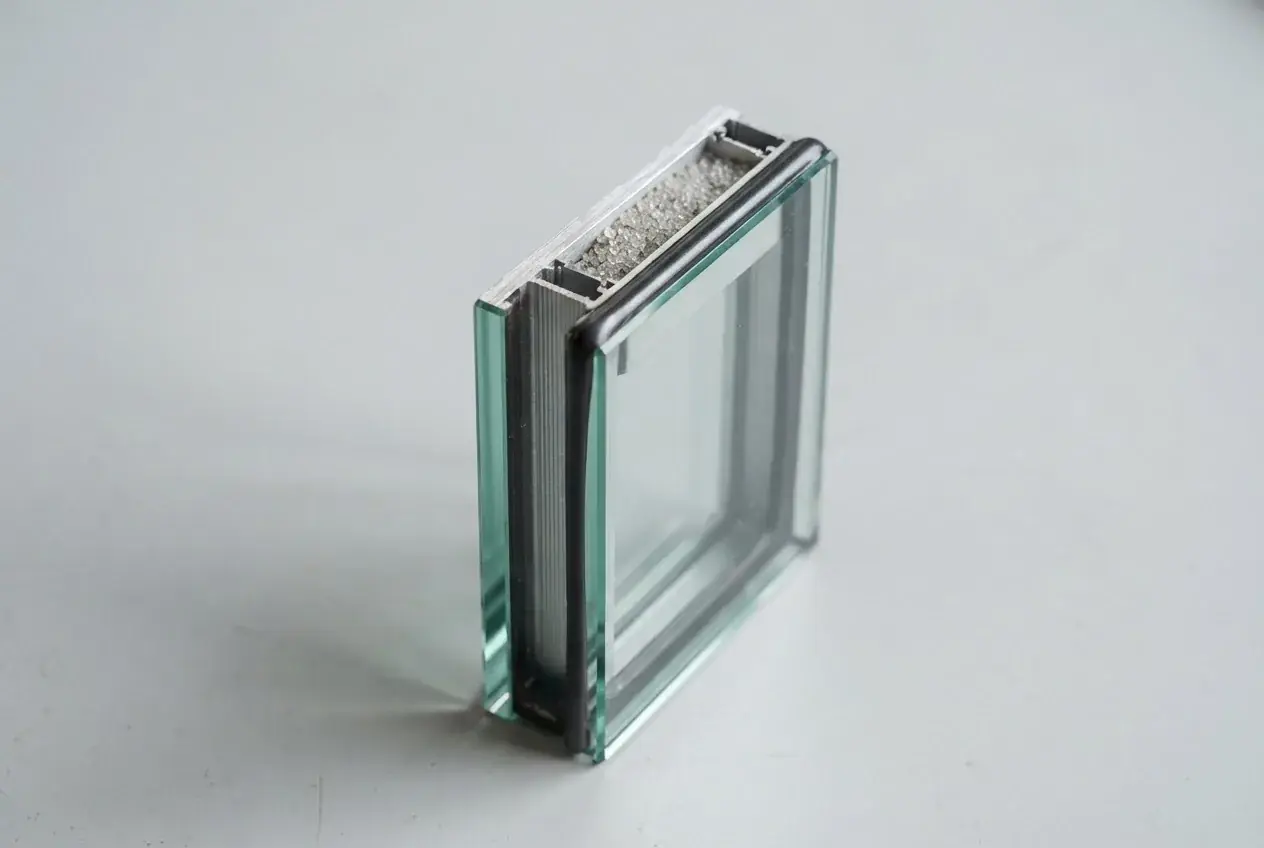
The figures are directional: they exclude air leakage, solar gain, installation bridges and HVAC efficiency. The same glazing in an operable casement can rate differently from a fixed window, because the frame-to-sash ratio changes; aluminum casement windows are rated per configuration.
Why Does the Same U-Factor Perform Differently in a Real Wall?
A U-factor is a steady-state value determined for the assembly — by test or by simulation — with no solar gain and the specimen sealed against infiltration. The 15 mph wind in the rating condition sets the outdoor surface film, not a leakage pressure difference. Air leakage is measured separately under NFRC 400; solar gain is reported as SHGC under NFRC 200 for the whole window, or as a glazing g-value under EN 410. None is part of U-factor.
| Factor | In NFRC U-factor? | Where to check it |
|---|---|---|
| Glass, frame, spacer, edge | Yes | Assembly rating and inputs |
| Air leakage | No | NFRC 400 report or label value |
| Solar heat gain | No | SHGC under NFRC 200; g-value under EN 410; EN ISO 52022 for the whole window |
| Installation thermal bridges | No | Installation detail, insulation, flashing |
| Size and window type | At rated size | Rating config vs order config |
Size and type change the frame fraction: 15.4% at 1.5 × 1.5 m, 30.7% at 0.6 × 0.9 m. In sunny markets, solar gain through a west-facing opening can exceed its winter conduction loss, so a lower U with a higher SHGC may be the wrong glass.
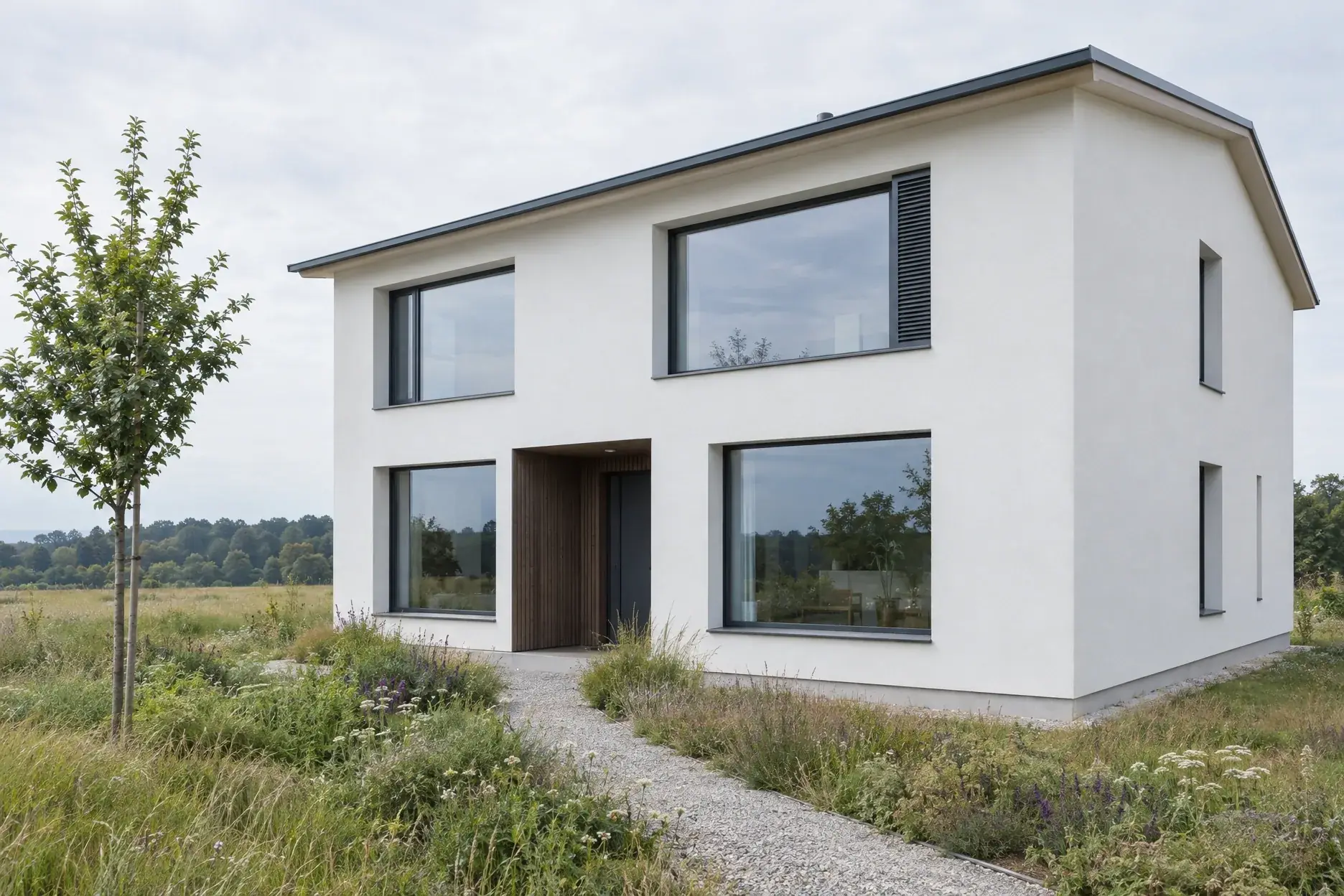
Installation is the largest uncontrolled variable. Rough-opening gap, insulation, flashing and sealant decide whether the assembly performs as rated, and the worked example excludes all of it — treat those savings as transmission only. No label captures a cold bridge at the perimeter.
What Should You Ask a Supplier Before You Accept a U-Factor?
In the EU, whole-window Uw is declared under EN 14351-1 and calculated under EN ISO 10077-1; in North America, the reference is an NFRC 100/102 rating. The two are not interchangeable: different reference conditions and calculation routes mean the same window can carry two different numbers, so compare like with like. Ask for Uw, not Ug, and for the inputs: Ug, Uf, ψ, dimensions, window type, gas, Low-E and spacer.
| Item to request | Why it matters | Acceptable evidence |
|---|---|---|
| Whole-window Uw | Describes the product being bought | NFRC label or report; EN 14351-1 declaration |
| Calculation inputs | Lets you check the result | Ug, Uf, ψ, size, type, gas, Low-E, spacer |
| Rated size and configuration | Ratings are configuration-specific | Report matching the order |
| Standard basis | Shows which method was used | NFRC 100/102 or EN ISO 10077-1 |
| Condensation resistance | Cold-climate surface risk | CR value or frame-temperature analysis |
The rating configuration must equal the order configuration: size, opening type, glass, spacer and hardware define the product, and changing one voids the rating. Red flags: a glass-center value presented as a window value, a "typical" figure with no specimen, a number with no unit, U and R used interchangeably, a certificate with no standard or size.
Applied to ourselves, the same list applies. For a quoted window, Aoslon states Uw for that size and configuration and lists the inputs behind it — Ug, Uf, ψ, spacer, gas and the calculation or test basis — in the quotation documents, so the figure can be checked the way Table 7 describes. We do not publish one U-value for a whole family, and the ranges in this article are design targets, not certified values.
Is a Lower U-Factor Always Worth the Extra Cost?
No. Increments come from triple glazing, krypton, wider profiles, warm-edge spacers and advanced coatings, and each step buys a smaller reduction. Above, the first step cut transmission loss by 50%, the second by 33% of the remainder. Payback depends on climate, energy price, window area and the heating or cooling share of the bill; in mild and hot markets, SHGC and shading usually pay back faster.
The judgment is sequential. In a heating climate, the strongest step is usually from single or ordinary double glazing to a thermally broken frame with double Low-E and a warm-edge spacer; the third pane is a second step, justified by comfort, condensation or severe cold. Comfort can matter more than the bill: a frame below dew point stains and molds whatever its U-value.
Frequently Asked Questions
What is a good U-factor for windows?
It depends on the dominant load. A heating-dominated climate usually needs Uw 1.0–1.6 W/(m²·K), a mixed climate 1.4–2.0 and a cooling-dominated climate 1.8–2.6. Compare only whole-window ratings at the same size and configuration, and check the local code.
Why is my window's U-factor higher than the glass datasheet?
The datasheet quotes center-of-glass Ug; the label quotes whole-assembly Uw. Frame, spacer and edge are weaker paths, so the whole-window number usually comes out higher — with an ordinary aluminum frame, much higher. A double Low-E unit with Ug near 1.4 W/(m²·K) commonly reaches Uw 1.6–2.4 in a thermally broken frame.
Is a lower U-factor always better?
Not automatically. It can come with a less favorable SHGC, a heavier profile, a higher price and a longer payback. In hot climates, solar gain often dominates the cooling load, so SHGC and shading may matter more. Condensation resistance and installation also decide comfort.
How much does U-factor affect my heating bill?
It affects the transmission part of the load. In the worked example, one 1.5 × 1.5 m opening at 4,000 K·day falls from about 752 kWh/yr to 376 kWh/yr when it moves from ordinary aluminum and double clear glass to a thermally broken frame with double Low-E. The saving depends on fuel, HVAC efficiency, air leakage, solar gain and the number of openings.
Do aluminum windows have a bad U-factor?
Ordinary aluminum frames do, because aluminum conducts readily; frame Uf is roughly 5.5–7.0 W/(m²·K). A thermal break brings Uf to roughly 2.0–3.5 and whole-window values with double Low-E glazing to about 1.6–2.4. Profile depth, break width, spacer and glass build decide the final rating.