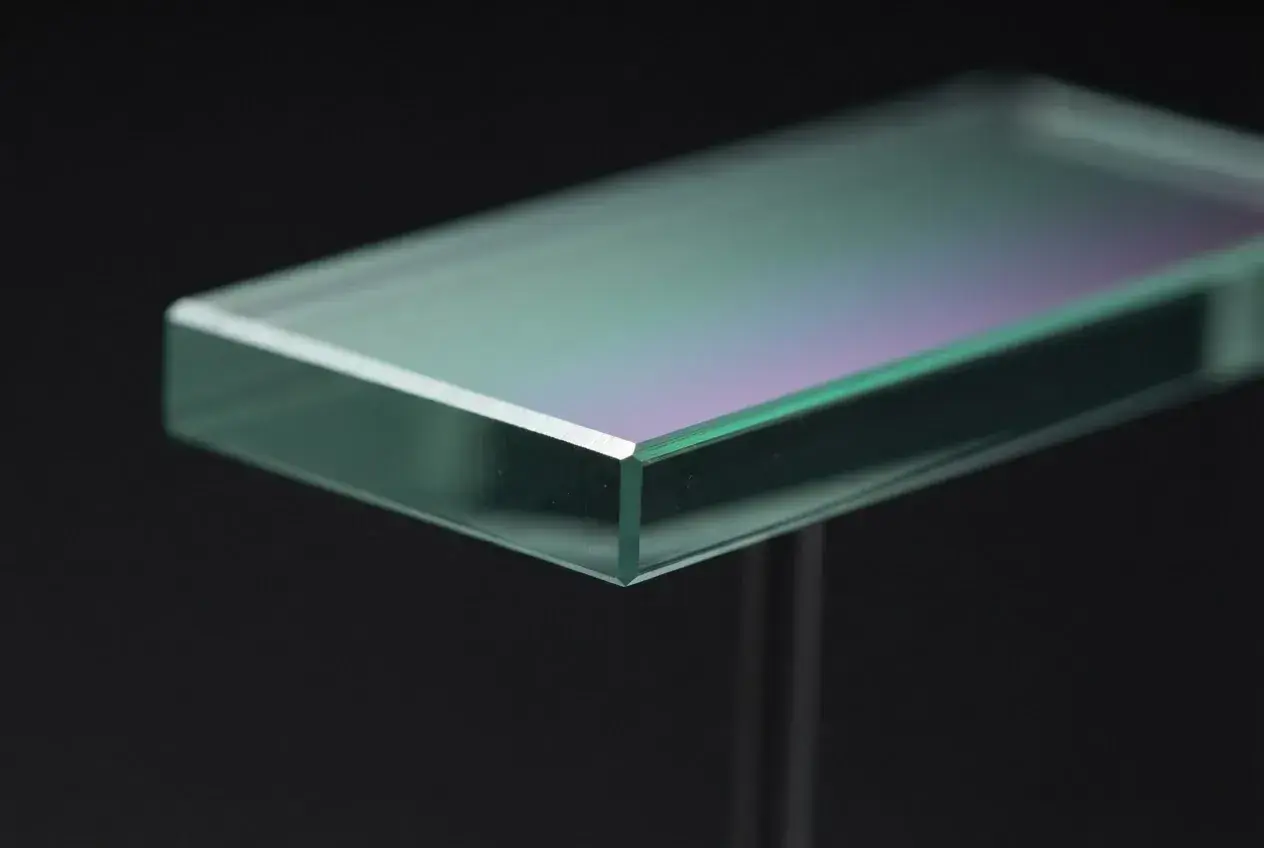
An impact-rated window is a complete assembly — frame, sash, glazing, hardware and anchors — tested to survive a wind-borne missile strike and the pressure cycles that follow. The interlayer holds the broken glass, the frame carries the wind load and the anchors transfer it into the wall. The rating is a test result for one specimen, not a property of thicker glass, and it says nothing by itself about watertightness, design pressure or code acceptance. Evidence falls into three families: an ASTM E1886/E1996 test report, a product approval such as a Miami-Dade NOA or Florida Product Approval, and voluntary certification or testing such as AAMA Gold Label or AAMA 506.
What Do Impact-Rated Windows Actually Protect Against?
An impact rating describes how an assembly behaves under a sequence of loads. Three demands are evaluated separately, and passing one does not imply the others.
- Wind-borne debris impact. A roof tile, gravel or timber strikes the glazing. The assembly must stay closed and retain the broken glass.
- Cyclic pressure after impact. The damaged specimen must carry repeated positive and negative pressure — a hurricane's gust-and-release pattern, not one steady push.
- Water penetration. Driven rain must not reach the interior. This depends on drainage, seals, pressure rating and installation.
Thicker glass raises stiffness but does not replace the interlayer, which bonds the fragments so the opening stays covered when a pane cracks. E1886 and E1996 cover the first two demands; watertightness sits inside the NAFS framework and is reported separately.
Impact rating is not a waterproof rating. A window can pass its impact test and still leak if its pressure rating is too low, weep holes are blocked, sill flashing is wrong, or the installation seal is incomplete.
What Do ASTM E1886 and E1996 Actually Test?
The two standards are quoted as a pair, but they do different jobs: E1886 is the test method, E1996 the performance specification that says what counts as a pass.
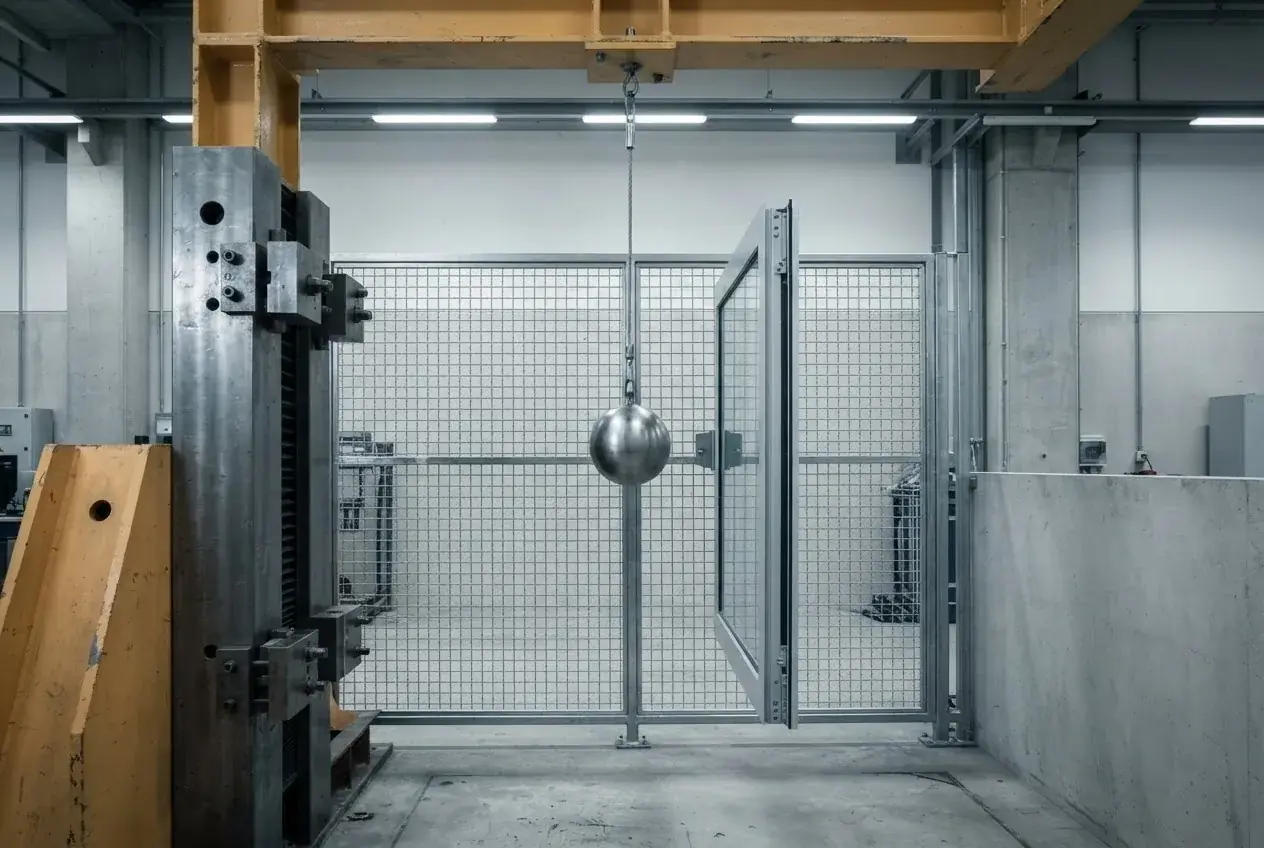
ASTM E1886 is the test method. It covers windows, curtain walls, doors and protective systems. A missile strikes the specimen, then the laboratory applies positive and negative air-pressure cycles. It defines how impact and cycling are performed, not which missile or pressure applies to a given building.
ASTM E1996 is the performance specification. It sorts applications into wind zones 1 through 4 and missile levels A through E, designates the missile type for each, and states the acceptance criteria after the E1886 loading sequence. The test uses a large timber missile or small projectiles, depending on the zone and sometimes the height of the opening. The report should name the wind zone, missile level and edition of the standard.
A pass means the assembly stayed closed: the missile did not penetrate, the glazing stayed in its frame, and the specimen survived the pressure cycles that follow. The report does not certify other sizes, glass or hardware.
A report covers only the tested configuration. Substitution and extension rules — what changes a report can cover without a new test — come from the approval authority and, for AAMA 506 reports, from that specification, not E1996. Larger units, a different glass build or swapped hardware usually require re-evaluation. Florida accepts E1886/E1996, the TAS protocols or AAMA 506 as test bases — parallel routes, not interchangeable certificates.
Design pressure is a separate axis. DP comes from the structural wind-load calculation, usually to ASCE 7; NAFS defines the performance class and grade a product is rated to. A window with adequate DP for one building may be under-specified for another.
Miami-Dade NOA vs Florida Product Approval vs AAMA Certification: Which Do You Need?
Buyers ask for "the certificate" as if one document settles everything. Five documents circulate, answering three questions: did the assembly pass, does the authority having jurisdiction accept it here, and has the factory been inspected?
Miami-Dade NOA. A Notice of Acceptance is a county product approval issued by the Miami-Dade Product Control Section. It confirms that a product or system, including its installation method, is accepted under the Florida Building Code for the High Velocity Hurricane Zone (HVHZ). It carries an expiry date and is tied to factory quality audits.
Florida Product Approval. This is the statewide route. It supports projects outside the HVHZ but does not replace HVHZ approval. Miami-Dade and Broward are the HVHZ counties, and a Broward project must still confirm that its authority having jurisdiction accepts the document.
AAMA Gold Label. Voluntary third-party certification: sample windows are tested to the applicable standards and the factory is inspected regularly. It covers air, water and structural performance. Thermal performance is certified separately, typically through NFRC. Gold Label does not certify impact performance; that needs AAMA 506 or E1996/E1886 testing.
AAMA 506 is not Gold Label. It is a voluntary impact and cyclic test specification accepted by the Florida Building Code as an impact basis. It produces a test report, not a factory certificate or a local approval. Certification answers "tested and factory inspected"; an NOA answers "accepted here." Neither substitutes for the other.
| Document | Issued or administered by | Proves | Does not prove | Accepted where |
|---|---|---|---|---|
| ASTM E1886/E1996 report | Accredited lab | Impact and cyclic criteria for the specimen | Code approval, factory inspection, watertightness, untested sizes | Technical evidence |
| Miami-Dade NOA | Product Control Section | Product and installation accepted in the HVHZ | Statewide acceptance; other configurations | Miami-Dade HVHZ |
| Florida Product Approval | Statewide system | Statewide acceptance for the described product | Automatic HVHZ acceptance | Florida outside the HVHZ |
| AAMA Gold Label | FGIA-administered program | Air, water and structural testing; factory inspection | Impact performance unless separately tested | Projects where the scope is accepted |
| AAMA 506 report | Accredited lab | AAMA 506 impact and cyclic protocol | Local approval or factory certification | FBC impact basis |
| Project location | Lead document | Also request |
|---|---|---|
| Miami-Dade or Broward (HVHZ) | Miami-Dade NOA | Installation drawings, anchor schedule, expiry; Broward acceptance |
| Florida outside the HVHZ | Florida Product Approval | Approval record, installation details, local acceptance |
| Caribbean or Latin America | What the authority, engineer and insurer accept | Written acceptance before pricing |
PVB or SGP: Which Interlayer Is Right for Impact Glass?
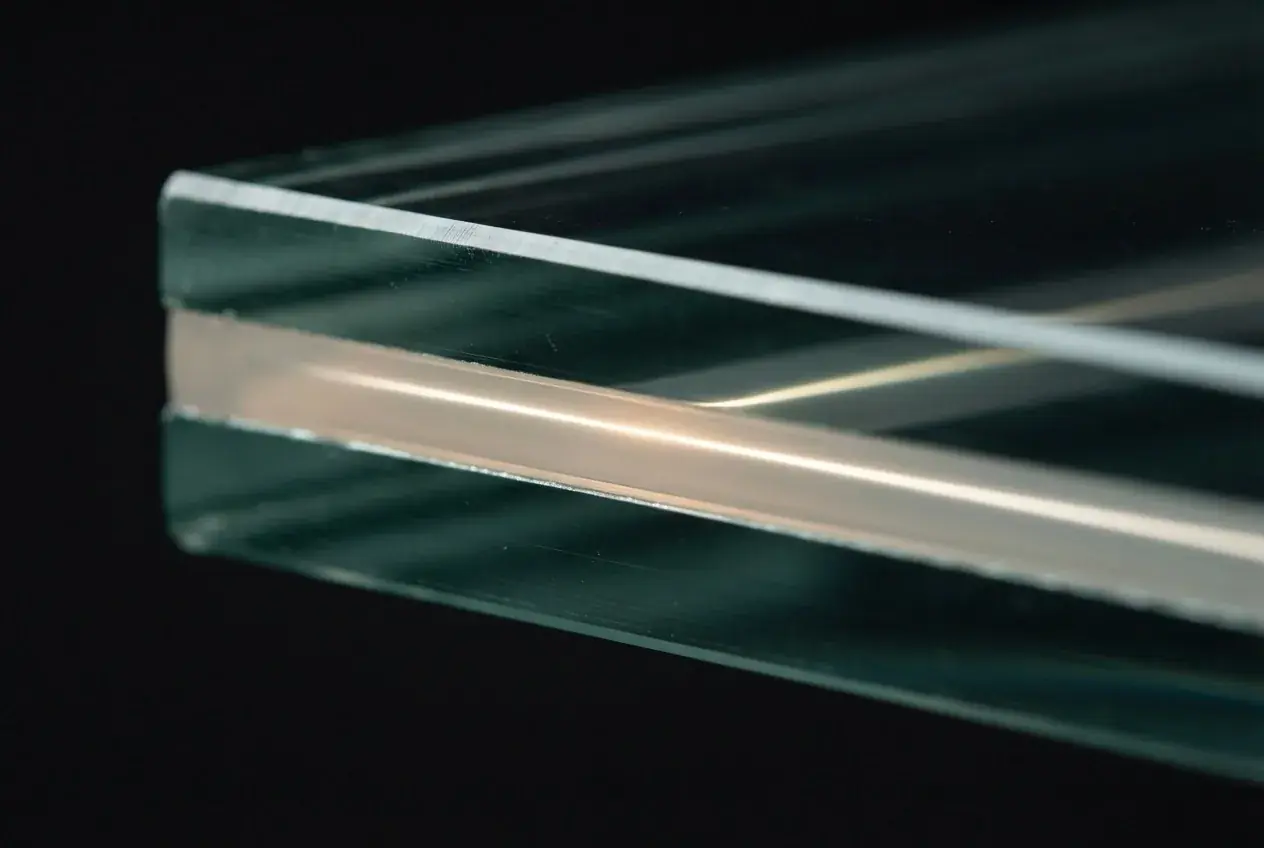
The interlayer holds broken glass together. Two families dominate, and the difference that matters is post-break behavior.
PVB is the most common choice: lower cost, optically clear and good at acoustic damping. Standard PVB is not intended for prolonged moisture exposure at exposed edges, and a laminate that loses both panes can sag or fold unless the opening is small or restrained.
SGP is an ionomer. It is stiffer and more tear-resistant than PVB, keeps much of that stiffness after breakage, and suits large lites, high design pressures and structural laminates. It costs more. Both interlayers soften as temperature rises, and stiffness depends on load duration, so compare them at the project's service conditions — ask the supplier for data at those conditions, not a generic ratio.
Either can suit a hurricane-rated laminate; the choice depends on lite size, design pressure, edge exposure, acoustics and budget. "Laminated" alone is not a specification — the build sheet should name glass types, interlayer type and thickness, and IGU makeup.
Why Do Impact Sliding Doors and Windows Usually Use Aluminum Frames?
Aluminum dominates impact openings: its strength-to-weight ratio lets a narrow profile carry a large laminated lite, and internal reinforcement raises bending resistance without doubling the sightline. That makes large aluminum sliding glass doors, curtain walls and high-DP assemblies practical.
In coastal markets, a thermal break separates interior and exterior aluminum, lowering whole-window U-value and keeping the interior surface warmer, so condensation is less likely. In cooling-dominated climates the solar heat gain coefficient drives cooling load more than U-value, so specify both. Coating or anodizing addresses salt-air corrosion.
Impact sliding doors are tested as complete assemblies. Sash, interlock, hardware, rollers and frame are all in the specimen. A report for a fixed aluminum window does not qualify a sliding door, and a sliding door report does not cover a different panel count or hardware set. Roller and hinge duty must match sash weight and design pressure.
Aluminum is not the only option. Vinyl is common in residential replacement and has thermal advantages; wood and aluminum-clad wood serve other segments. But large lites, high DP and commercial work usually favor aluminum, and the frame should follow opening size, DP, NAFS class and certification scope.
What Anchor Detail Does an Impact Window Approval Require?
Impact performance belongs to the assembly plus its installation. The same window fixed with a different anchor type, spacing, embedment, edge distance or substrate may no longer match its approval.
An NOA or product approval normally states anchor type, spacing, embedment, edge distance and acceptable substrates — concrete, masonry, wood frame. If conditions differ, the route is a signed and sealed engineering justification; without it, tested and installed assemblies are not the same product.
Water management is also an installation issue. Sill flashing, weep holes, sealant and the transition to the weather-resistive barrier decide whether rain reaches the frame edge, which the impact rating does not cover. Aoslon details frame drainage, weep paths and sill details on its aluminum impact window systems.
How Do Impact-Rated Assemblies Fail?
Most service failures happen at the interfaces between components, not in the glass itself.
- Glazing pull-out. The lite leaves the pocket because bite, gasket compression or retention is inadequate.
- Interlayer tear or sag. The laminate loses both panes and the interlayer tears or sags.
- Frame or sash distortion. The profile deflects at high pressure and breaks the seal or releases the glazing.
- Hardware failure. Rollers, hinges, locks and handles fail under a heavier sash or repeated cycling.
- Anchor pull-out. Anchors are spaced too far apart, set too shallow or placed too close to a masonry edge.
- Water intrusion. Sill, weep or flashing details are wrong even though the impact test passed.
Are Impact Windows Worth the Premium in Florida and the Caribbean?
Impact windows cost more than standard windows, and the gap is driven by the assembly rather than one line item: heavier laminated or insulating glass, a stronger frame and hardware, larger anchors, the certification route and the documentation the project requires. Two quotes for the same opening can differ mainly in what is certified and who supplies the evidence.
In Florida, insurers must file wind-mitigation discounts with the regulator. Owners usually document the claim with a Uniform Mitigation Verification Inspection form showing that all openings — windows, doors and garage doors — are impact-protected. The discount varies by insurer, coverage and construction; there is no single percentage.
Caribbean projects sit outside Florida jurisdiction. The route is set by the buyer's engineer, insurer and local authority; a Miami-Dade NOA, Florida Product Approval or E1996 report may be accepted. Confirm which before pricing.
What Should You Ask a Supplier Before Approving an Impact Sample?
Approving an impact sample is a documentation exercise. Six questions separate a supplier who understands the approval from one forwarding a brochure.
| # | Question | Document | Good answer | Red flag |
|---|---|---|---|---|
| 1 | Series, test size, glass and hardware covered? | Full report | Specimen matches quotation | "All sizes covered" |
| 2 | Missile level, wind zone and DP match? | Report and DP schedule | Meets the requirement | "Hurricane approved" |
| 3 | NOA, Florida approval or AAMA document current? | Approval and listing | Searchable in the database | Expired scan |
| 4 | Anchor schedule matches substrate and drawings? | Drawings and anchor table | Same substrate; letter for deviations | "Site decides anchors" |
| 5 | Glass build, water test and flashing complete? | Build sheet, water report, details | Named glass, interlayer, IGU, weep and sill | "Laminated glass" |
| 6 | Production and QC records travel with the shipment? | Incoming, in-process, final, packing | Traceability and sign-off | Records after payment |
Then verify the documents, not the answers. Match the specimen size, glass build and hardware in the report against the quotation; check the laboratory's accreditation; look up the NOA or Florida approval in the issuing database and check the expiry; compare the anchor schedule with the structural drawings; and confirm that the report and approval cite the same edition of the standard. A certificate with no test scope, or a promise that "all sizes are covered," is the signal to stop.
Frequently Asked Questions
What is the difference between impact-rated, impact-resistant and hurricane windows?
They are largely marketing labels for the same idea: an assembly intended to resist wind-borne debris. "Impact-rated" normally implies testing to a recognized standard; "hurricane windows" is a market term, not a rating. Ask which standard, wind zone, missile level and approval — not which adjective.
Do impact windows really stop water from coming in during a hurricane?
Not by themselves. Impact testing does not measure watertightness. Water performance depends on the water-resistance rating, drainage and weep holes, sill flashing, sealant and the wall connection. A tested window with the wrong sill detail will leak.
How much more do impact windows cost than regular windows?
There is no reliable single percentage: the difference depends on size, glass build, frame type, certification route and quantity, and it moves with aluminum, glass and freight prices. Compare line-item quotes that separate glass, frame, hardware, documentation and installation.
Does a Miami-Dade NOA work outside Florida?
Not automatically. An NOA is a county approval for the HVHZ. Outside Florida it is technical evidence that an engineer, insurer or authority may accept, but acceptance is a local decision and should be confirmed in writing. In Florida outside the HVHZ, Florida Product Approval is the statewide route.
What are ventanas de impacto, and which certification should I ask for in Latin America?
Ventanas de impacto is the Spanish term for impact windows. There is no single regional approval. The buyer's engineer, insurer or local authority may accept a Miami-Dade NOA, Florida Product Approval or an ASTM E1996 report. Confirm which is accepted before the quote, then ask for that evidence on the impact window system offered.