Aluminum window MOQ from China is not a single number a factory can publish, because it is not set at the order desk. It is the largest of four production batch minimums for a given series: the profile extrusion run, the surface-finish batch, the insulating-glass build and the hardware pack. That is why the same window can quote at one minimum in a standard finish and at a different one in a special colour or a non-standard glazing build. It is also why MOQ is counted per series and per finish rather than per container. This guide breaks down each of the four minimums, shows why project lots and dealer stock lots are quoted differently, explains why several window series can share one container without changing any MOQ, and sets out the planning sequence that keeps a mixed load from being re-quoted.
Most of the confusion comes from treating the container as the unit of production. It is not. A container is a transport unit, and that single distinction is what makes mixed loading routine.
What Actually Sets the MOQ on Aluminum Windows
The minimum is set by the cost of starting one production run, not by whether the factory wants small orders. Four operations must be set up before a window is assembled, and each has its own floor.
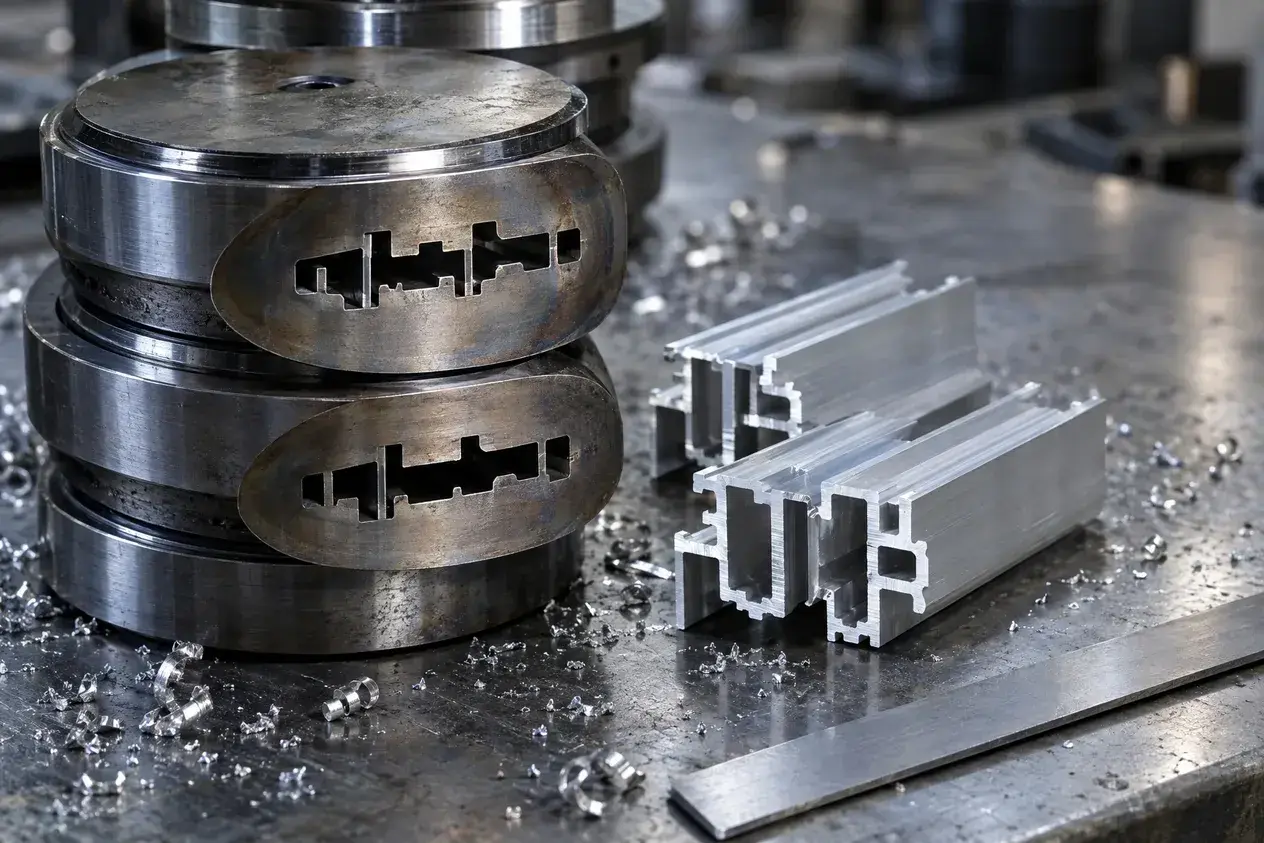
The profile run. Profiles are extruded against a die, so the constraint is the shortest economic extrusion run for that profile. A new die adds tooling and a trial run, and buyers rarely move this number because the die belongs to the series.
The finish batch. Powder coating runs one colour per oven load, and anodising one colour per tank. A special RAL code starts a batch of its own even when the profile and glazing are unchanged — the usual reason two quotes for the same series differ.
The glass batch. An insulating-glass line sets up per build: thickness, Low-E coating, spacer type and cavity gas. Changing the spacer or the gas is a new setup, not a variation.
The hardware pack. Hardware arrives from its maker by set or by box, so the factory inherits a supplier minimum on every distinct handle, hinge and lock set. A named brand in a special finish adds a second minimum.
Read the quotation as the maximum of these four, not their sum and not an average. Change one RAL and a different one of the four becomes the tallest.
The Four Batch Minimums Behind a Single MOQ Number
The four behave differently, and each row names one lever a buyer can pull. This is the table to take into a negotiation.
| Batch minimum | What triggers it | What the buyer controls |
|---|---|---|
| Profile run | Extrusion die and alloy batch for the series | Whether standard profiles for that series are acceptable |
| Finish batch | One colour per oven load or anodising tank | How many colours the order uses — one or two RAL codes, not five |
| Glass batch | Insulating-glass line setup per glass build | Whether the glazing build is unified across the order |
| Hardware pack | Hardware supplied by set or by box | Whether standard hardware is accepted or a named brand required |
The lever sits in the last column. A buyer cannot move the extrusion die: the profile is the series. The levers that cost nothing are the ones to pull first — collapse five RAL codes into two, and standardise the glazing build so the insulating-glass line runs one setup instead of four. Both reduce the quoted MOQ without changing the window's performance. Accepting the series' standard profile or standard hardware does the same, but changes what you are buying, so price that trade before you make it.
Specification and MOQ pull the same way. Wider leaves, heavier glass and deeper frames consume more profile per unit and raise the economic run, which is why the window size and specification chart belongs beside this discussion.
Project Lot vs Dealer Stock Lot: Why the Same Series Quotes Twice
Two buyers can request the same series on the same day and receive different minimums, because quantity is not the only input — the lot type is.
A project lot is sized from an opening schedule: so many windows per floor, per room. The factory sets up once around that project, and a modest total can be viable because there is a defined end. What you pay for that is a small-lot charge, quoted as a line item. A dealer stock lot is a replenishment programme, so the meaningful figures are the first order per SKU per colour and the multiple at which that SKU can be reordered — not the one-off total.
State which buyer you are before the quote is prepared. If you are building stock rather than completing a single site, start from the dealer programme.
How the MOQ Line Is Written in a Chinese Factory Quote
A Chinese factory quote often carries the MOQ in one line, and that line is where most misunderstandings start. Three units coexist in the same document: sets or pieces for production and MOQ, square metres for pricing, and kilograms for profile or aluminium ingot cost. A number is meaningless until you know which unit it is in.
A usable quote states MOQ per series and MOQ per finish separately, then says what happens below that line: the lot is consolidated with another order, priced with a small-lot charge, or handled as a sample order. It should also list validity and Incoterm as separate fields — FOB, CIF, CFR and EXW are not interchangeable, and none of them changes the production minimum.
Ask for the per-series breakdown rather than a total. A total hides which series is setting the floor. For how the square-metre figure above it is assembled, see how the per-square-metre price is built.
Can Several Window Series Share One Container?
Yes, and it is standard practice rather than a concession. Our own aluminum window range states it plainly: mixing window and door series in one container is standard practice, so terraces, entrances and internal partitions can ship with the same order. The door range uses the same wording in reverse.
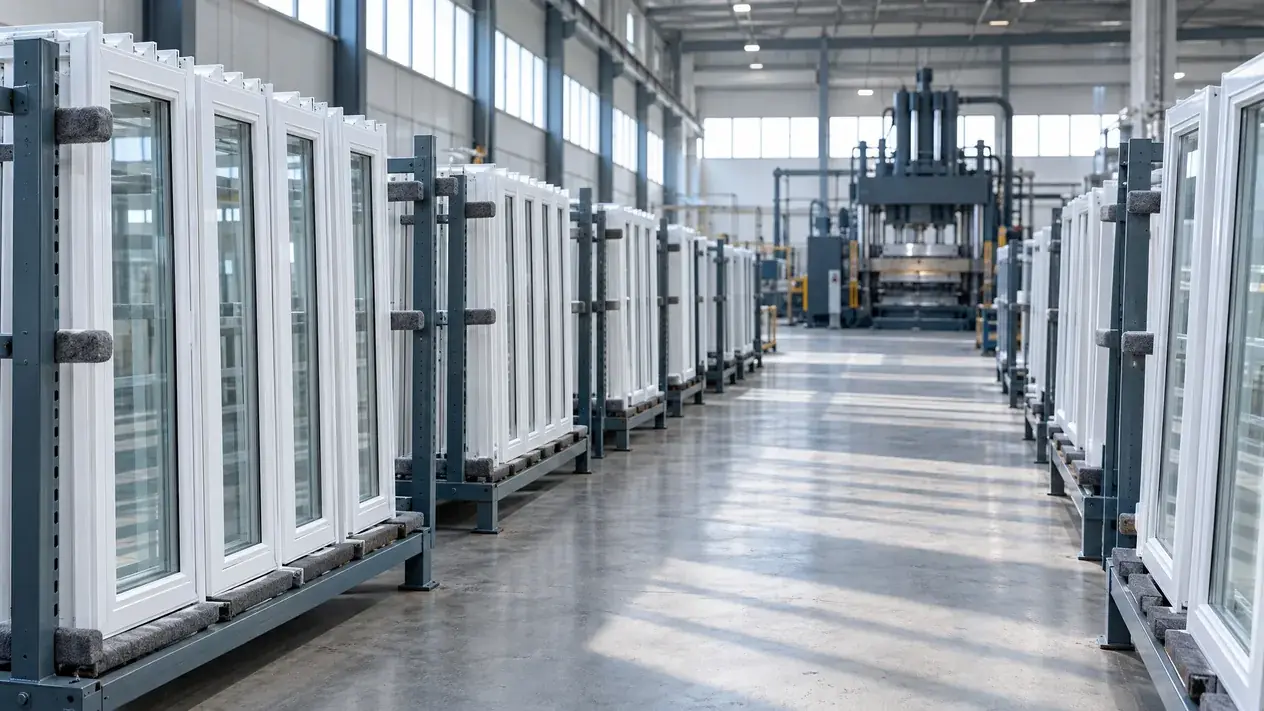
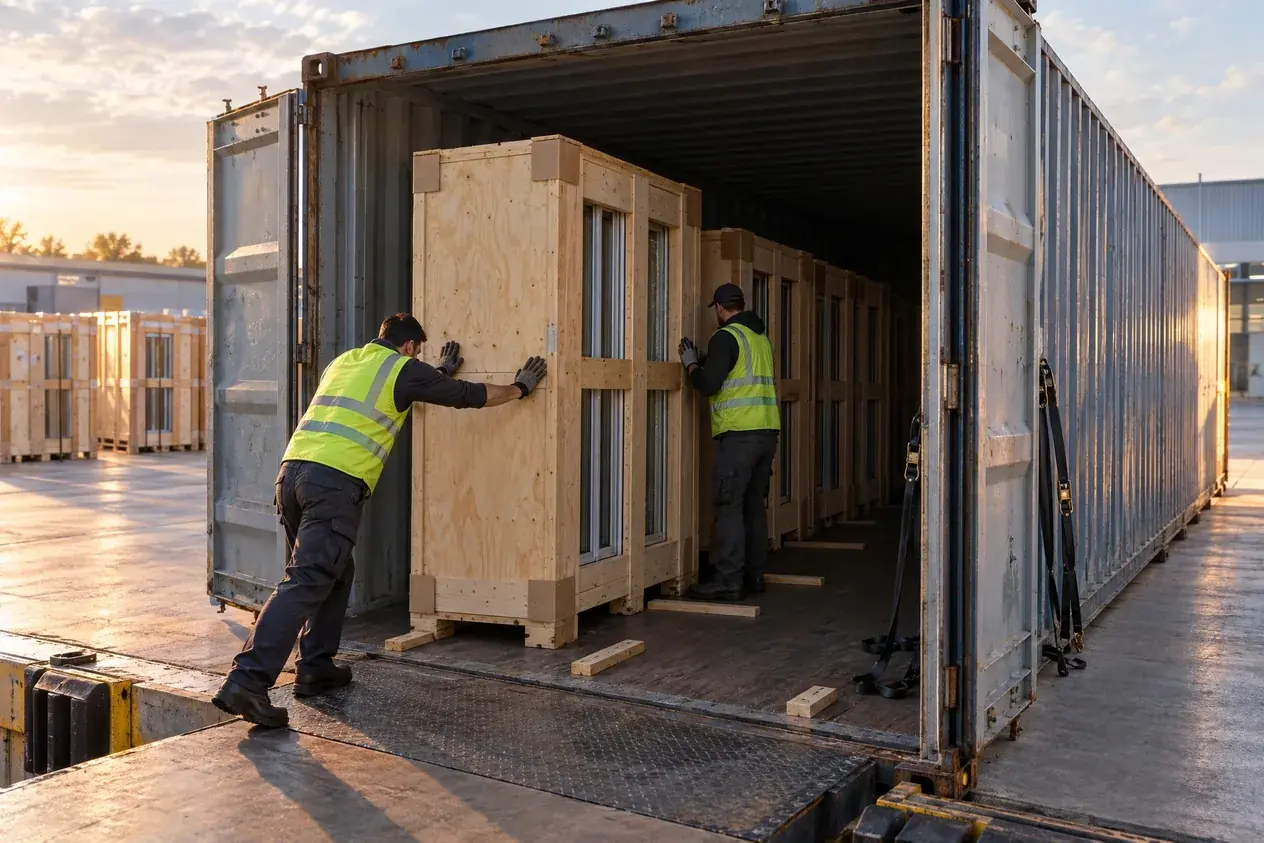
The reason is a unit distinction. MOQ belongs to production; the container belongs to transport. Each series still runs against its own batch minimum — the extrusion, finish, glass and hardware setups do not merge because the crates will travel together. What merges is the loading: crates from several series are sequenced into one container on the loading plan.
So a mixed container neither lowers any MOQ nor raises it. It changes three documents — the loading plan, the packing list and the receiving plan. Treat it as a logistics decision rather than a commercial one, and the question stops being whether you can mix and becomes the order in which you load.
What Mixing Series Costs You in Practice
Mixing is not free, and the costs are specific enough to be quoted line by line. Four of them appear on almost every mixed load.
- More colour batches. Every additional RAL adds a coating changeover. The cost lands in the unit price, not the MOQ.
- More glass builds. Each build is a separate insulating-glass setup, with more offcuts at each end of the run.
- Lower loading efficiency. Frames of different depths and widths do not nest, so packing labour and dunnage rise.
- More paperwork. The packing list must be coded by series, floor and room, or the site receives the right windows in the wrong sequence. Certificates attach to the product, not the shipment, so a mixed load travels with several document sets — the certificates and test reports we issue are listed by type.
Ask for these as itemised lines. A single mixed-container fee tells you nothing about which is driving it and cannot be reduced by changing the plan.
How to Plan a Mixed Load Without Re-Quoting
Six steps keep a mixed load from being quoted twice.
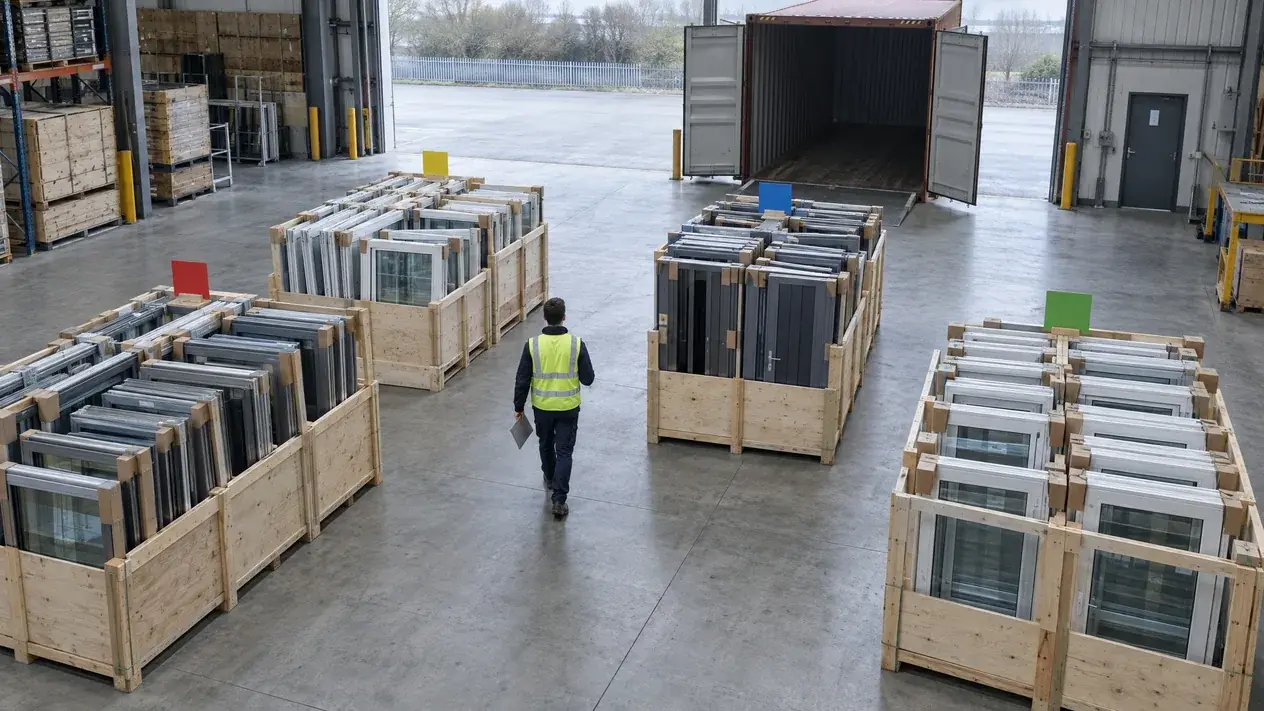
- Freeze the opening schedule first — by series, floor and room — and only then request a price. Quoting before the schedule is fixed guarantees a re-quote.
- Require MOQ per series and MOQ per finish as separate lines in the quotation.
- Agree in writing how the below-MOQ portion is handled: consolidated, surcharged or sampled.
- Before approving anything, obtain the loading plan: crate positions, series codes and weight distribution.
- Sequence production by the longest-lead series, consolidate at one port, and ship under one bill of lading for the FCL.
- Build the packing list on the same series codes as the loading plan, and send it with the goods.
Step four is the point of no return. Once the loading plan is approved, a change in the series mix re-opens the quotation, because the crate layout, the packing list and the production sequence all move together.
When a Mixed Container Is the Wrong Call
A mixed container is the wrong call in three situations, each decided by the order rather than by preference.
- When the colour and glass build count climbs high enough that changeover cost exceeds what the freight saving is worth.
- When the site takes delivery in phases. Two shipments timed to the build programme usually beat one mixed container, because site storage and double handling cost more.
- When the buyer needs long-term spares. A single-series stock makes replacement simple for years; a mixed stock multiplies the SKUs held for after-sales.
The test is arithmetic, not instinct: obtain the mixed quote and the two separate quotes on the same Incoterm, and compare them line by line.
Below the MOQ: Sample and Pilot Quantities
Below the minimum, the first step is a sample, not a pilot. A sample sash or corner section verifies the profile, the colour and the hardware on the bench; a pilot run verifies the production line, the packing and the loading sequence at small quantity. They answer different questions and are priced differently.
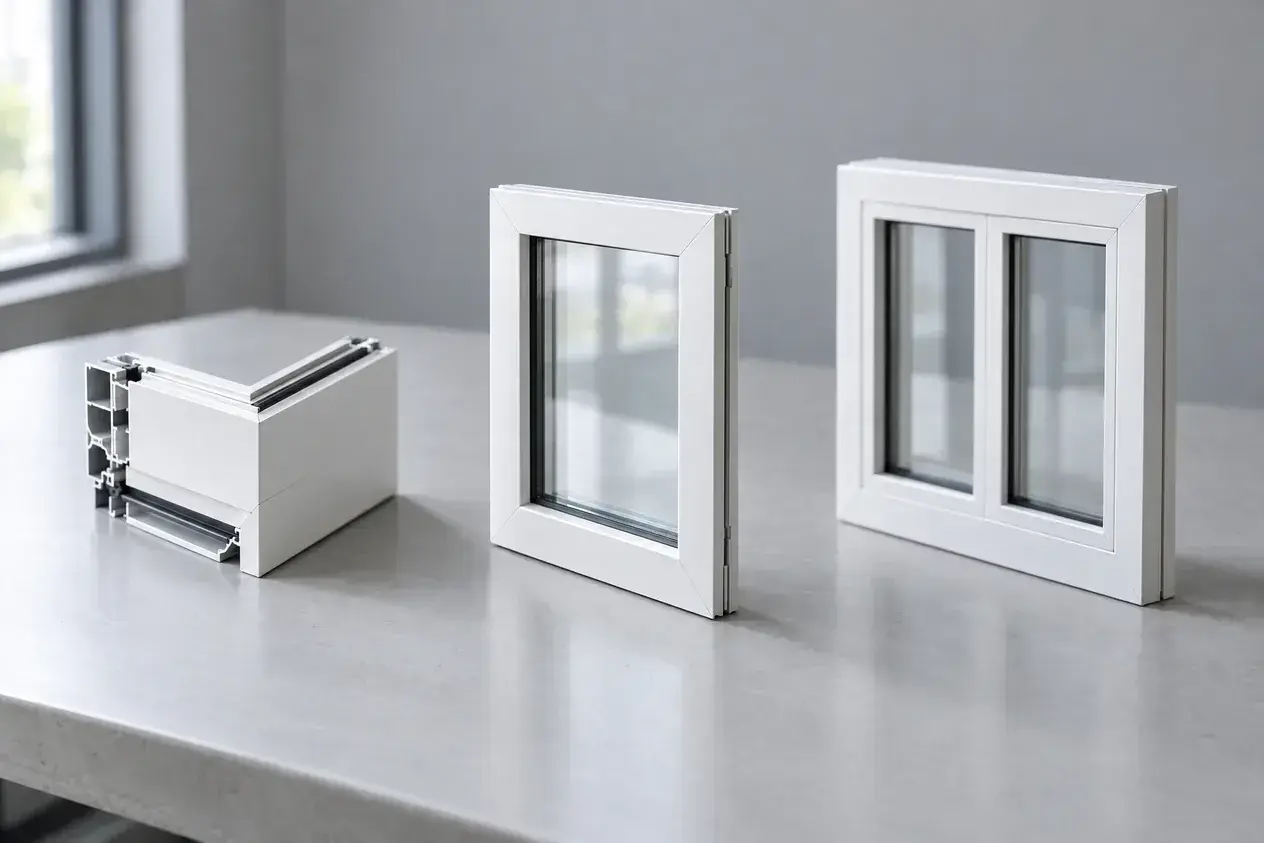
The published position is straightforward: sample sash or corner sections can be produced against a sample fee, credited back on the project order. A pilot is negotiated as a small lot against the same four batch minimums, which is why it is quoted rather than listed.
A production shortfall is a different decision from a sample request. When the order sits below the minimum, there are four routes, and they are not interchangeable. Take them in this order:
- Change the specification first. Collapse the colours to one or two, unify the glass build, and accept the series' standard profile or hardware. This is the only route with no small-lot surcharge and no waiting, and it is usually enough when the shortfall is one colour or one glazing variant.
- Pay the small-lot surcharge. Keep the specification and accept a line-item premium for the setup. Ask for it as a fixed amount or a percentage of the order value, and ask which of the four batch minimums it covers, so you know what you are buying.
- Join a consolidated run. Ask whether the factory can add your lot to another run of the same series and finish. The combined quantity meets the minimum, but you take the run date rather than your own. Get that date and the cut-off for joining it in writing.
- Split the order across time. Buy the below-MOQ items as a sample or pilot lot now, and place the balance as a full lot later. This only works if the later balance reaches the minimum; otherwise it buys time without solving the shortfall.
One route does not work: mixing in another series. A mixed container shares transport, not production — each series still runs against its own batch minimum, so adding a different series to fill the container leaves the below-MOQ series exactly where it was.
The decision rule: if the shortfall is a colour or a glass build, change the specification; if the specification is fixed and the gap is small, price the surcharge against the cost of waiting; if the gap is large or the date is fixed, join a consolidated run or split the order. Get the chosen route written on the quotation, with the amount or the date, before you approve the drawings.
Frequently Asked Questions
What is the minimum order quantity for aluminum windows from China?
No single figure exists. MOQ is project-based and calculated per series and per finish as the largest of the four batch minimums. Confirm it on the quotation for your series and colour.
Can I mix different window series in one container?
Yes. Mixed loading is standard practice. Each series still meets its own batch minimum, but crates are consolidated on the loading plan, so one container carries several series.
Does mixing series increase the price?
It can. Extra colours and glass builds add changeovers and packing labour, and those costs belong in the unit price, not the MOQ. Ask for them itemised.
Can I order below the MOQ for a sample or pilot run?
Yes. Sample sash or corner sections can be produced against a sample fee, credited back on the project order. A pilot run is quoted as a small lot against the same batch minimums. For a production order below the minimum, the choice is to change the specification, pay a small-lot surcharge, join a consolidated run, or split the order; mixing another series does not help.
Is MOQ counted in sets, square metres or weight?
Production and MOQ are counted in sets or pieces. Square metres price the window, kilograms cover profile cost. A quotation should name the unit.
A container is not a production unit, and a MOQ is not a price. Get the four batch minimums in writing per series and per finish, then send your opening schedule for a quote.