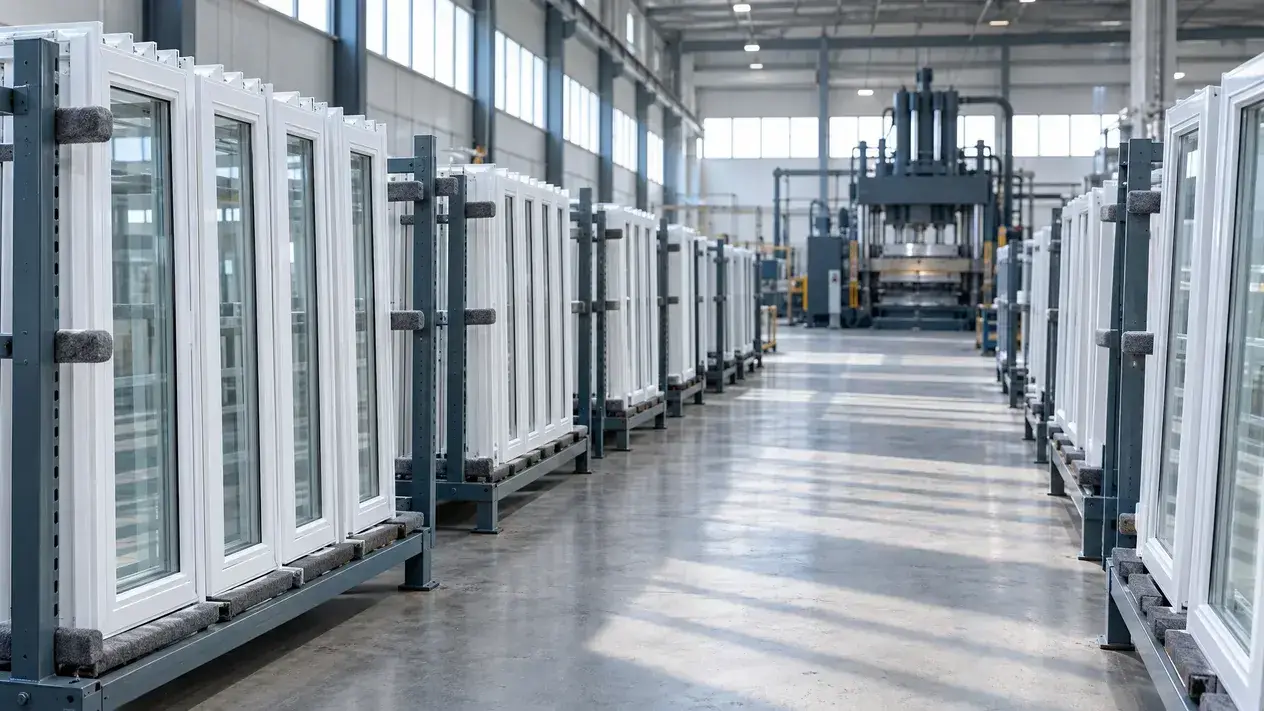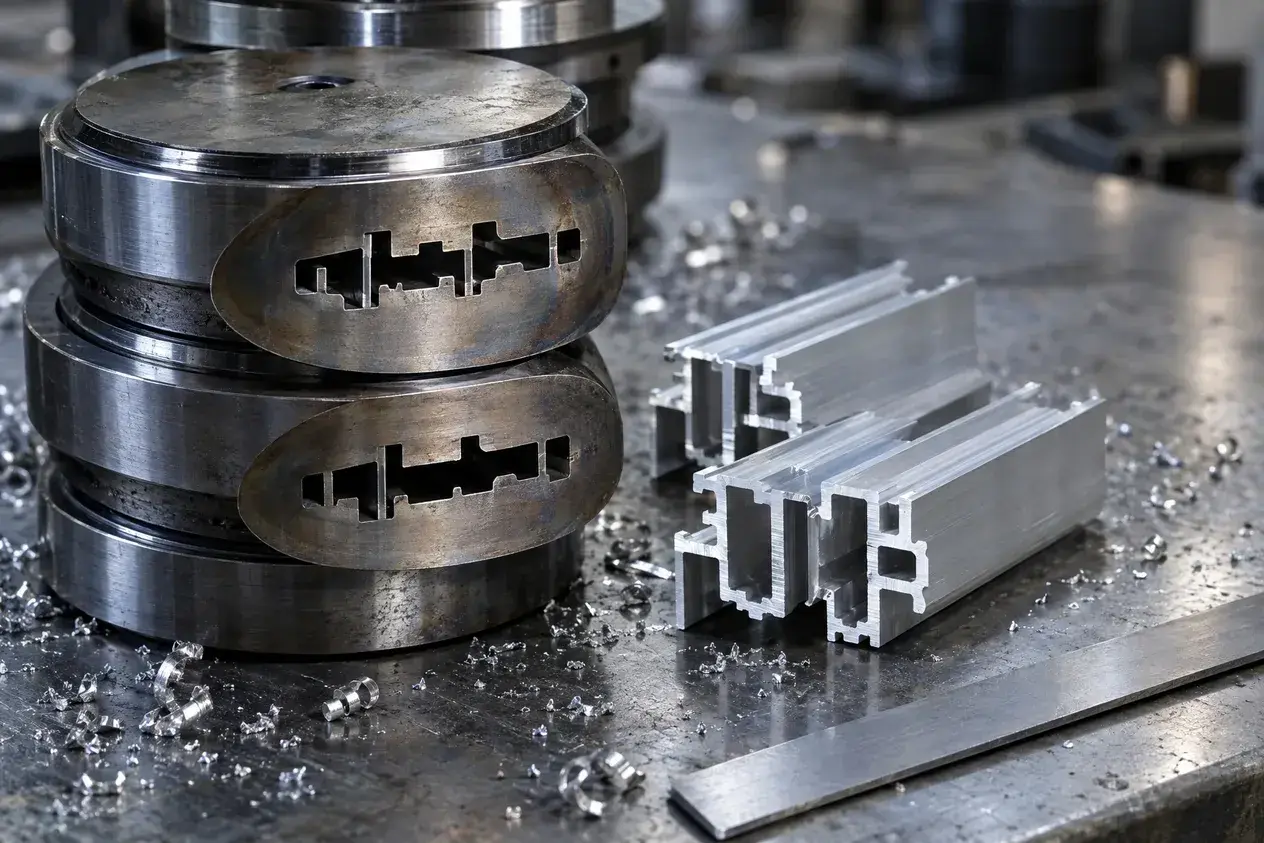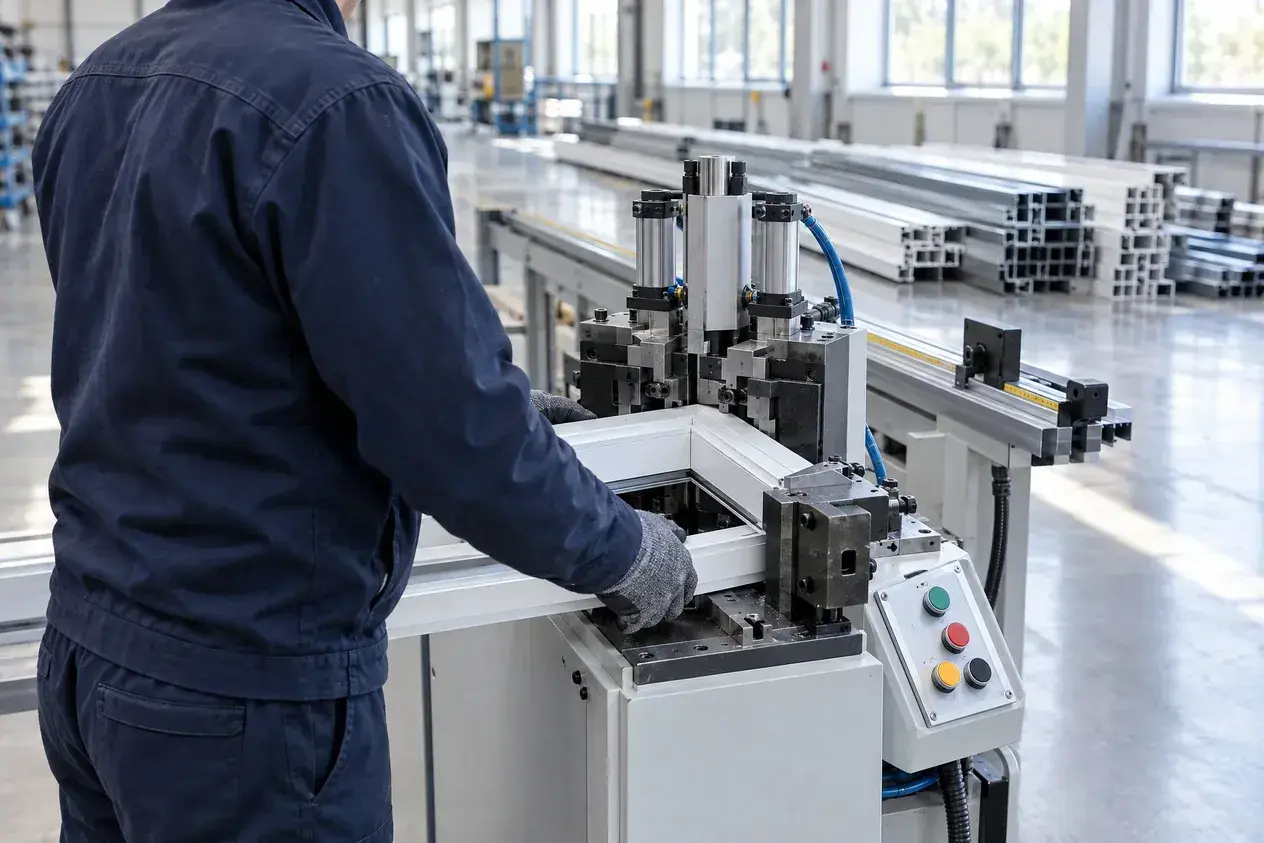
An aluminum window sample is a pre-production unit built so a buyer can inspect profile, finish, glazing and hardware before a production run starts. It comes in three levels — a corner section, a full sash, or a complete window — and which one you need depends on what you are trying to prove. Three factors decide the outcome. Cost is a sample fee quoted against the specification, not a list price, driven by profile and finish batch, glass build, hardware, bench time and crating. Timing is quoted per request, because it depends on how complete the drawing is. Approval rests on the record you sign, not on the photographs you were sent. This guide compares the three sample levels, explains how the sample fee and credit work, and lists the profile, glass and finish checks to complete before you approve a sample.
What Does an Aluminum Window Sample Cost?
There is no list price. The sample fee is quoted against the specification you send, so two factories can price the same request differently. The quotation should show what the fee pays for:
- Profile and finish. Series, alloy, wall thickness and coating. A special colour costs more than a stock finish; the line change is charged either way.
- Glass build. Pane thickness, spacer, gas, Low-E or lamination. Each process is another pass through a glass line.
- Hardware. Brand, model and finish; an imported set carries its own freight.
- Bench time. Hand-built off the line by a fitter who is not running a machine.
- Packing. A timber crate and corner protection, charged at cost.
Budget against the market before you compare quotes. As a planning range, Chinese aluminium window factories commonly quote a corner section free or for a nominal charge with the buyer paying courier; a full sash in the region of USD 150–500; and a full-unit mock-up in the region of USD 500–1,500, before freight. Express air freight on a full sash or unit is a separate line and can be a large share of the total. These are industry-typical budgeting ranges, not our price list, and they move with size, glass build, hardware and finish — confirm the figure with each supplier.
The published policy is that a sample sash or corner section can be produced against a sample fee, credited back on the project order. That is a credit, not a cash refund. Freight is normally separate, following weight and destination. Ask for fee, credit condition and freight as three lines on one quotation, and what order value triggers the credit. Read the fee next to the finished-unit price: what an aluminum window costs per square metre shows what the sample is a percentage of.
Whether to order on that fee is a four-question test, not a negotiation instinct. Is the fee credited, and at what order value? Does it cover the specification you actually intend to buy — the glass build, hardware brand and colour — or a stripped version? Is freight quoted separately? And is the fee inside the range for that sample level? A fee credited at an order value you will reach is a deposit on the first order. A fee credited only above a value you will never reach is a cost, so budget it as one or negotiate the trigger down before you pay.
How Long Does a Sample Take to Produce?
The clock starts when the drawing is frozen, not when you ask. A factory cannot cut against a dimension still moving. Four stages:
- Drawing freeze. Series, sizes, glass build, colour code, hardware and handing are fixed and signed. Later delays trace back here. Buyer-controlled: usually 2–5 working days once the quotation and opening schedule are agreed.
- Sample build. Cutting, machining, assembly, glazing and hardware on the bench. Special colours and laminated glass add outside processing. Typically 7–15 working days for a corner or sash; a full-unit mock-up takes longer.
- Photo and video approval. The supplier photographs the sample, with the drawing or a tape in frame, before crating. A wrong handing is still correctable here. Allow 1–3 working days for the supplier's photos and 2–5 for your own review.
- Packing and courier. Crating, export paperwork and transit. Transit time follows destination, not the factory. Crating takes 2–3 working days; express transit is commonly 3–7 working days plus customs clearance.
How long a window sample takes is quoted per request, because the build depends on the drawing. For your project calendar, plan five to eight weeks from the start of the drawing freeze to a sample on your bench: up to a week to freeze and issue the drawing, two to three weeks to build, one to two weeks to photograph and approve, and one to two weeks to crate, ship and clear customs. A firm sample lead time given before the drawing is seen is a guess, so ask for the duration of each stage rather than one total.
Production is different. The lead time published for these systems is often 25–45 days after deposit and drawing freeze, confirmed on each quotation. That describes a run, not a sample, and not door-to-door. Sequence it as three gates: the approved sample record, the cleared deposit, then production release. That 25–45 day clock starts at the later of the deposit and the signed sample approval, not at the sample request. Add packing and booking before the vessel, then ocean transit. Depending on how fast the sample is approved, first shipment commonly falls between week ten and week seventeen from the start of the drawing freeze, before ocean transit. The two stages you control, drawing freeze and sample approval, are where that calendar usually slips.
Corner Section, Full Sash or Full-Unit Mock-Up: Which Do You Need?
The choice between a window corner sample and a full sash is about the question, not the budget. A corner section is two lengths joined at 90 degrees and proves the profile. A full sash adds glazing, gaskets, hardware and operation. A full-unit mock-up adds the frame, drainage and fixing interface.
| Sample level | What it proves | What it cannot prove | Best used for |
|---|---|---|---|
| Corner section | Profile, alloy, wall thickness, thermal break, coating, corner joint | Operation, drainage, glazing build | First look, colour and finish approval |
| Full sash | The above plus glazing, gasket, hardware and operation | Frame interface, drainage path, installation | Approving a system before a project order |
| Full-unit mock-up | The complete assembly, including frame, drainage and fixing interface | Site conditions, production consistency | Project sign-off and installation rehearsal |
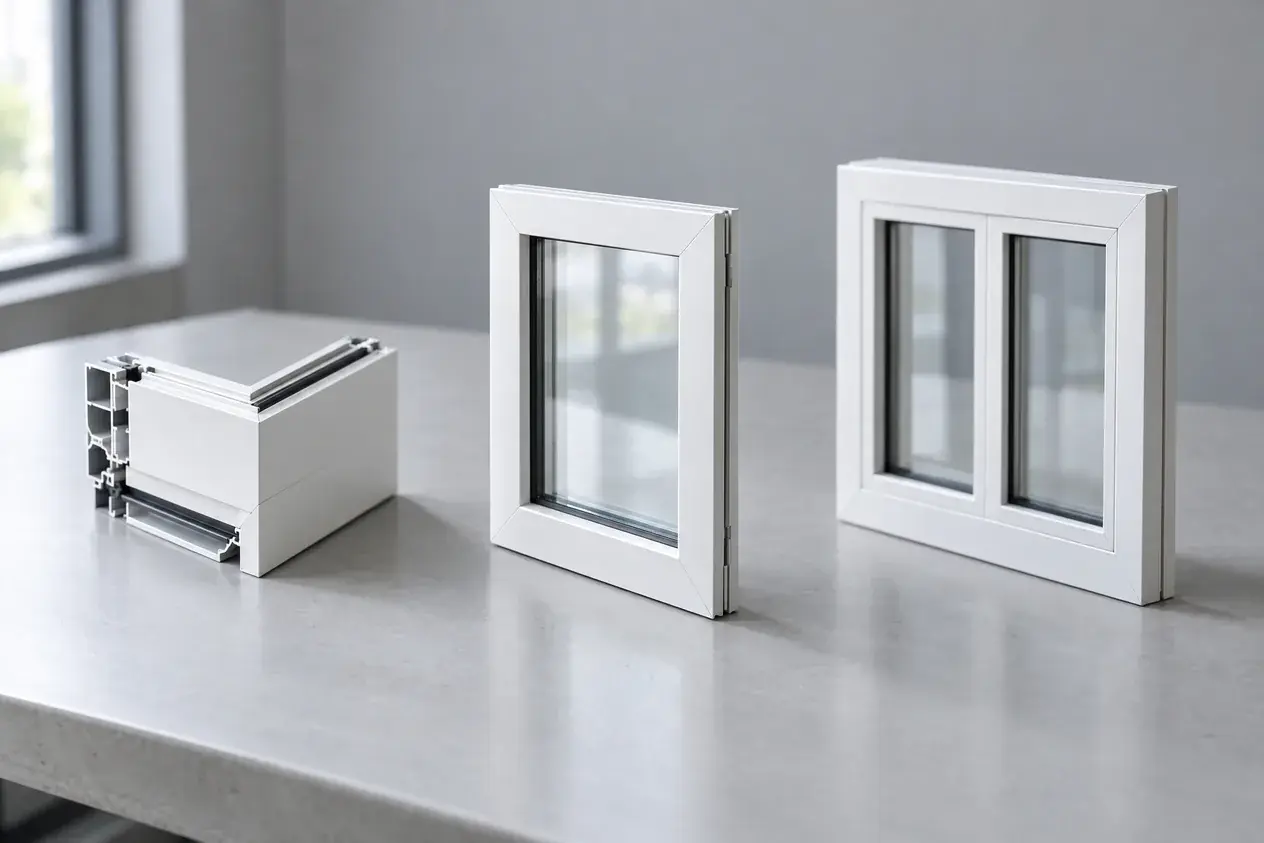
The rule: appearance stops at the corner; operation needs the sash; drainage and the fixing interface need a complete unit. Where the window marries into a site-built opening, the mock-up is the only level that tests that interface.
What to Check on the Profile and Finish
Measure at the cut end, not the face. Use a caliper at several points around the perimeter and compare each reading with the approved drawing. A face measurement says nothing about the wall. Check the alloy grade and section shape against the drawing.
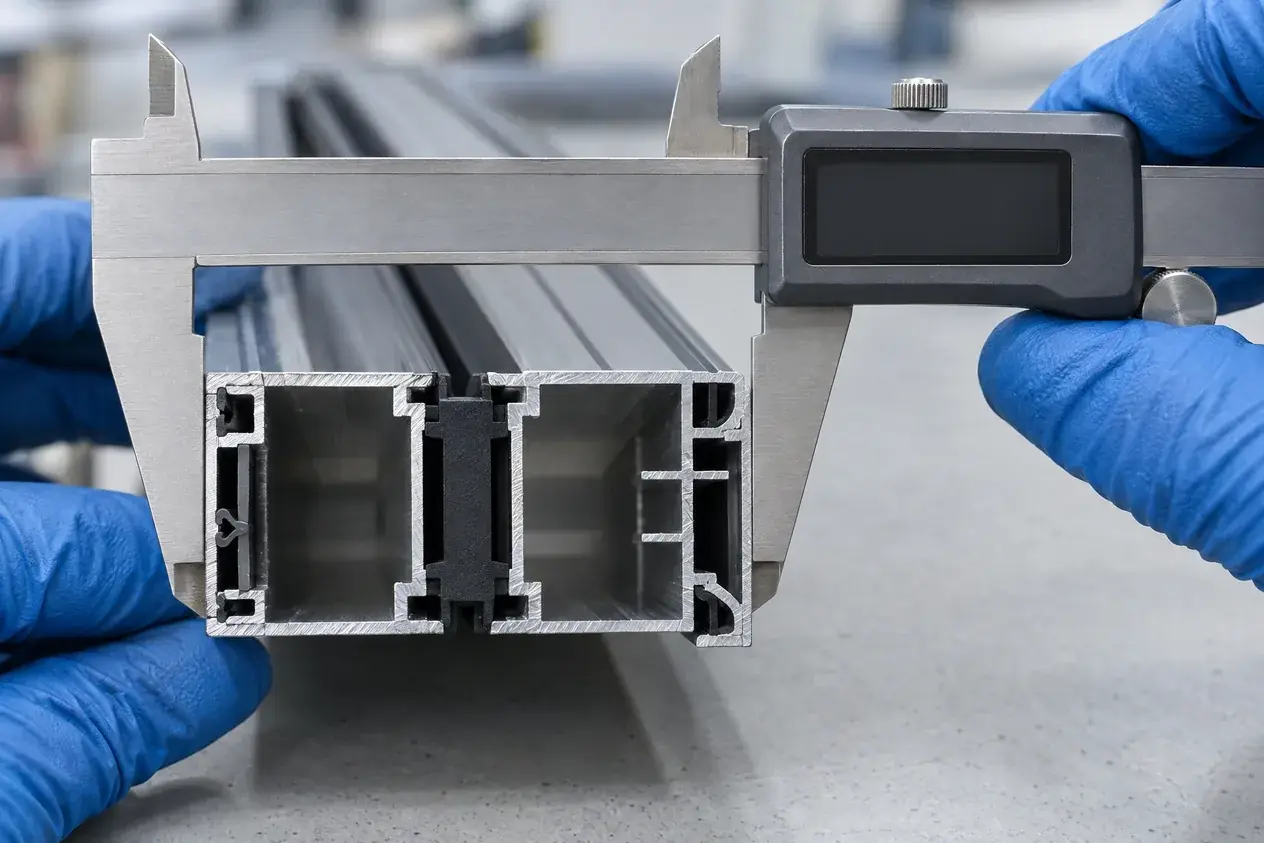
On a thermal-broken profile, check the polyamide strip for continuity and width. It should run the full section with no gap and no over-painted edge, and the mechanical lock should hold it so it cannot be pushed out by hand. At the corner, check the joint gap and the injection. An open gap is a water path and a strength problem.
Judge the finish against a physical standard: the RAL or supplier code under daylight, film thickness on a flat face, adhesion on a concealed area, and batch uniformity. Variation between batches is normal; variation across one sample is not.
One caution: the site's price guide describes 1.2–1.4 mm wall as an economy, non-thermal market band — a price tier, not an acceptance minimum. The basis is the approved drawing: if it says 1.6 mm, 1.4 mm is a rejection.
What to Check on Glass, Hardware and Seals
Put the order table next to the sample and tick each glass item: pane thickness per lite, spacer type and width, cavity gas, Low-E coating and which surface carries it, and edge deletion where the sealant needs bare glass. Surface orientation is the item most often wrong: a coated pane fitted backwards looks identical from the room and changes the U-value and the condensation behaviour.
Hardware is a brand-and-model check, not a style check. The friction stay, espagnolette, hinges and handle should match the quotation by brand and model, in the specified finish. Operate the sash through its full travel: feel for binding, check the drop at the handle side, and check the lock engages without lifting the panel.
Check seals with a finger and a light: a continuous seat, no twist, no pull-out at the corners, and vulcanised or moulded corner joints. Check the drainage path: weep holes and the pressure-equalisation chamber clear and open to the outside. A blocked weep hole is a leak waiting for the first storm. The aluminum casement windows range applies the same checks.
Sample vs Production: What the Sample Cannot Promise
A sample is bench-built; production is line-built. Different people, equipment and weeks. Profile from another extrusion batch, coating from another powder batch, glass from another line and hardware from another lot can all end up in a nominally identical window. That is not a defect, but it is a difference to control.
Make the sample identify itself. Ask the supplier to write series, profile code, finish batch and glass build on the sample label and in the approval record, then write "same series, same glass build, same colour code" into the order and the inspection criteria. That sentence lets an inspector reject a window without arguing about "close enough". For factory selection, see shortlisting an aluminum window manufacturer.
Aluminum Window Sample Approval: What to Sign, Photograph and Keep
Approval is a document, not a feeling. A sample you liked in a photograph and cannot describe in writing is a memory. The record should be one page, signed by both sides, and specific enough for a third party to inspect against.
Ask your supplier to put these on the approval sheet: drawing revision and date, profile series and code, glass build line by line, colour code, hardware brand and model, measured wall thickness, measured dimensions, the date, and the approver's name and signature on each side. Photograph the sample with its tag visible.
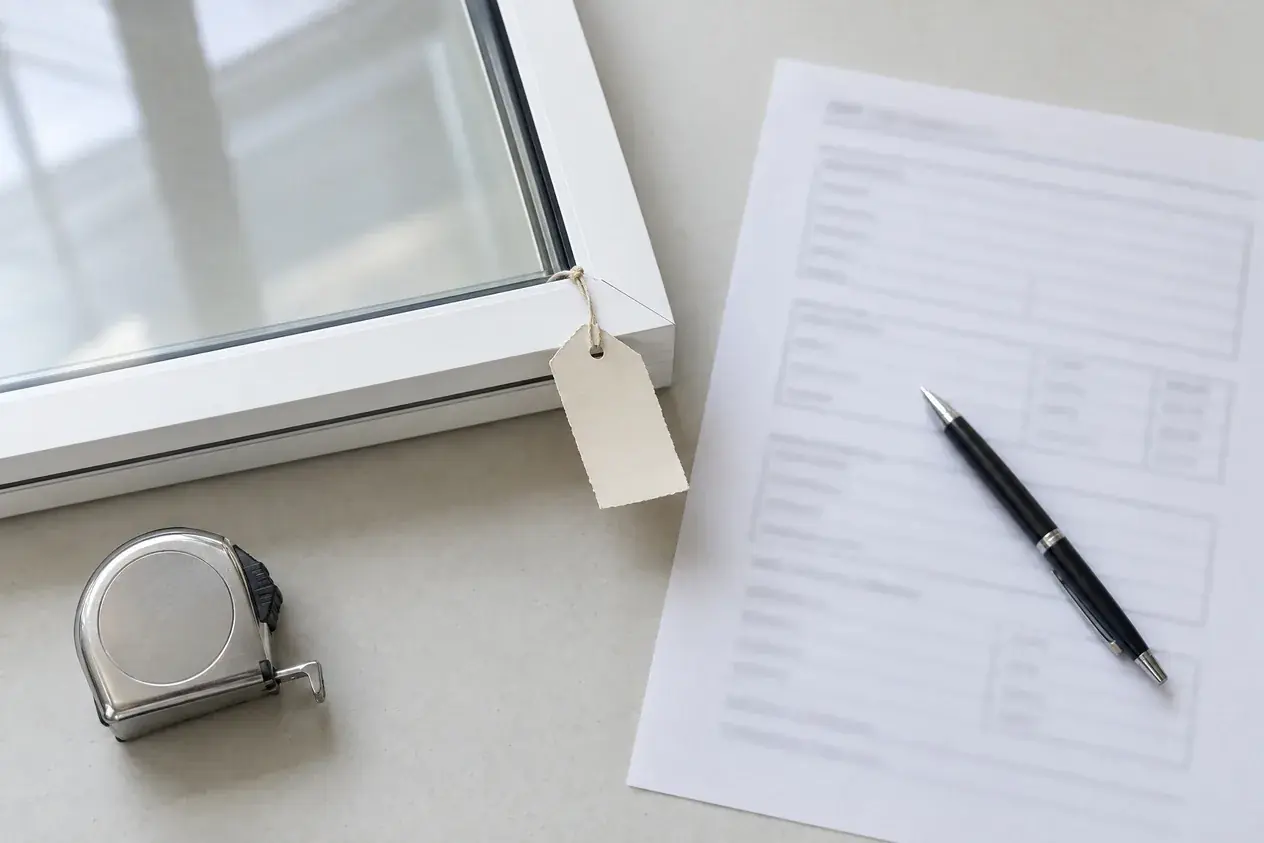
Then agree what is retained. Ask the supplier to keep the approved unit as the golden sample, tagged with the same revision, and to check production and pre-shipment against it. Ask how long it is kept and where. Keep a copy of the record.
Which Test Reports and Certificates Should Come With the Sample?
Three documents get called "certification". A test report records what one specimen did. A certificate states that a product or system meets a standard. A factory quality-system certificate speaks about the management system, not the window. Ask which one you are being sent.
Scope is the part that matters. A certificate that names the company but not the series does not cover your window; read the scope page, and if the series is not listed, treat it as evidence of capability, not conformity. A report on a 1.4 mm profile does not cover a 1.8 mm section.
Match the document to the market:
- Europe / CE marking: EN 14351-1.
- North America, U-value: NFRC 102.
- US and Canada, performance grading: AAMA/WDMA/CSA 101/I.S.2/A440 (NAFS).
- Australia: AS 2047.
- Impact resistance: ASTM E1886 and ASTM E1996.
- Factory quality system: ISO 9001:2015.
The AAMA Gold Label is a voluntary third-party programme with sampled testing and factory audits: a signal of how a plant is checked, not a substitute for the certificate scope in front of you. The documents Aoslon holds are on the certifications and test reports page.
Six Sample-Approval Mistakes That Cost Money Later
Most sample disputes are not about quality. They are about a record never made, or a check skipped because the sample looked right. Six that recur:
- Approving from photographs. A photograph flatters a coating and hides a corner gap. Approve the physical sample.
- Accepting a "similar" profile. A substitute alloy or thinner wall is not the same product. Measure the cut end.
- Keeping no colour standard. Without a retained swatch or code, every later batch is arguable.
- Leaving the glass build unwritten. "Double glazed" covers dozens of builds; pane, spacer, gas and coating belong on the record.
- Signing without a drawing revision. The record cannot say which drawing was approved.
- Never re-checking. One comparison is a snapshot; check production and pre-shipment against the golden sample.
The correction that matters is the one before crating. If you have the drawing, send your drawing and sample request with the series, glass build and target market, and the reply can be quoted against a fixed specification.
Frequently Asked Questions
How much does an aluminum window sample cost?
No fixed amount. The supplier quotes against the specification: profile and finish, glass build, hardware, bench time and crating. As a budgeting range, a full sash commonly quotes in the region of USD 150–500 and a full-unit mock-up USD 500–1,500, before freight; confirm per supplier. Ask for the fee, the freight and the credit condition — credited back on the project order — in one quotation, and confirm the trigger.
How long does a window sample take to arrive?
Four stages: drawing freeze, sample build, photo or video approval, then packing and courier. Because the build depends on how complete the drawing is, the timing is quoted per request. Plan five to eight weeks from the start of the drawing freeze to a sample in hand, then allow another four to nine weeks for the 25–45 day run, packing and booking before first shipment.
Is the sample fee refundable?
Usually credited, not refunded. The published position is that the fee is credited back on the project order, reducing the order value rather than returning cash. Ask the supplier to state the credit amount, the trigger, and whether freight is excluded.
Can I keep the sample after approval?
Ask for it and agree who holds it. A retained, tagged golden sample is the reference for production and pre-shipment checks. Suppliers normally keep one; a second set can be discussed. Record in writing how long it is kept and where.
Do I need a full window to approve a sample?
Only if you are approving what the smaller sample cannot show. A corner section proves profile, finish and corner joint. A full sash adds glazing, gaskets, hardware and operation. A complete unit adds the frame interface, drainage and fixing points.